
Building a 10-Year HOA Driveway & Parking Maintenance Budget
How HOA boards and condominium managers preserve capital reserves by staging resurfacing projects in phases.
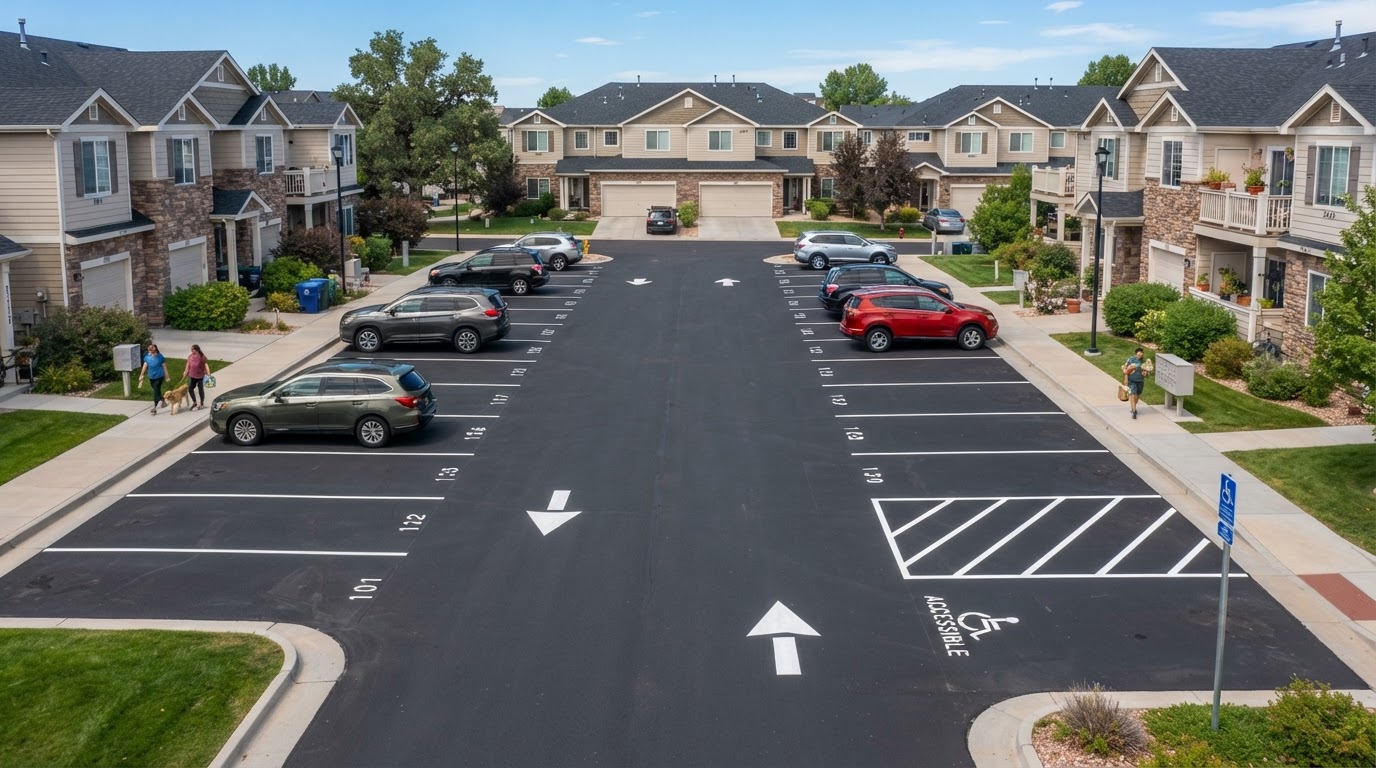
Staging multi-unit driveway sealcoating and asphalt overlays across alternate years ensures resident access while spreading capital expenses. For a homeowners association or condominium board, pavement is one of the largest and most visible capital assets, and a reactive, fix-it-when-it-breaks approach almost always costs more than a planned maintenance cycle. A well-structured 10-year maintenance budget transforms unpredictable emergency repairs into a predictable, reserve-funded plan that protects property values and avoids special assessments.
The first step is a professional pavement assessment. A qualified contractor or pavement engineer walks the entire community, documents the condition of each driveway, parking lot, and walkway, and assigns a condition rating based on the type and extent of distress—cracking, raveling, settlement, drainage issues, and surface wear. This assessment produces a map of which surfaces need immediate attention, which can wait, and which are approaching the end of their service life. Without this baseline, any budget is guesswork.
From the assessment, the contractor develops a lifecycle plan. Newer asphalt in good condition needs only crack sealing and periodic sealcoating. Mid-life pavement may require patching of isolated failures, an overlay in the worst sections, and continued sealcoating. Pavement near the end of its life may need full reconstruction, which is the most expensive line item and the one most likely to strain reserves if it is not planned for. The plan should estimate the year each major intervention is needed and its approximate cost, adjusted for inflation.
Phasing is the strategy that makes the budget manageable. Rather than sealcoating the entire community in a single year or overlaying all failing sections at once, the work is spread across multiple years. For example, a community with four distinct driveway clusters might sealcoat one cluster per year on a rotating four-year cycle, overlay the worst section in year three, and budget for reconstruction of the oldest section in year eight. This keeps annual expenditures level, avoids large spikes, and ensures residents always have access since only a portion of the pavement is under construction at any time.
Crack sealing should be an annual or biennial line item. Cracks are the entry point for water, and water is the primary cause of pavement failure. Sealing cracks as they appear—before they widen and before winter freeze-thaw cycles drive water into the base—is the cheapest insurance against major repairs. A small annual investment in crack sealing can delay an overlay by several years and a reconstruction by even longer, delivering an excellent return on reserve dollars.
Sealcoating on a two-to-three-year cycle protects the asphalt surface from oxidation, oil penetration, and UV degradation. For a large community, sealcoating is often the single largest recurring maintenance expense, but it is far cheaper than the overlay or reconstruction it postpones. The cost can be further controlled by competitive bidding, bundling the work with neighboring communities for volume pricing, and scheduling during the contractor's off-peak weeks for better rates.
Reserve funding is the financial backbone of the plan. A reserve study allocates a portion of monthly dues to a dedicated pavement reserve, so that when an overlay or reconstruction is needed, the money is already there. This avoids the dreaded special assessment—a large, unexpected bill to each homeowner. A properly funded reserve, guided by the 10-year maintenance plan, smooths the cost over time and keeps monthly dues stable. Boards that defer maintenance to keep dues low inevitably face larger, more disruptive costs later.
Communication with residents is essential to the plan's success. Homeowners need advance notice of sealcoating days, parking restrictions, and construction timelines. A clear, written maintenance calendar distributed at the start of each year, with reminders before each phase, minimizes frustration and compliance issues. When residents understand that the phased plan protects their property values and avoids special assessments, they are far more supportive of the work and the dues that fund it. A well-executed 10-year plan turns pavement from a recurring crisis into a managed asset.
Looking for a qualified contractor? Browse our directory of driveway resurfacing professionals specializing in commercial & hoa driveway maintenance. Compare services, request quotes, and find the right specialist for your project.
 Advertisement
Explore Commercial & HOA Driveway Maintenance
Large-scale parking & driveway management for HOAs and commercial properties.
Browse Commercial & HOA Driveway Maintenance