Infrared Asphalt Repair: Seamless Patching Without Cold Joints
How infrared thermal repair heats existing asphalt to 300°F to create a permanent monolithic weld for potholes.
Infrared asphalt repair eliminates seam failure by reheating existing asphalt and blending new hot-mix directly into the damaged area. Traditional pothole and patch repair methods—saw-cutting a rectangle, filling it with cold patch or hot-mix, and tamping it down—leave a cold joint between the new and old asphalt. That joint is a weak point where water infiltrates, freeze-thaw cycles pry the patch loose, and the repair fails within a season or two. Infrared technology solves this fundamental problem by welding the patch into the surrounding pavement.
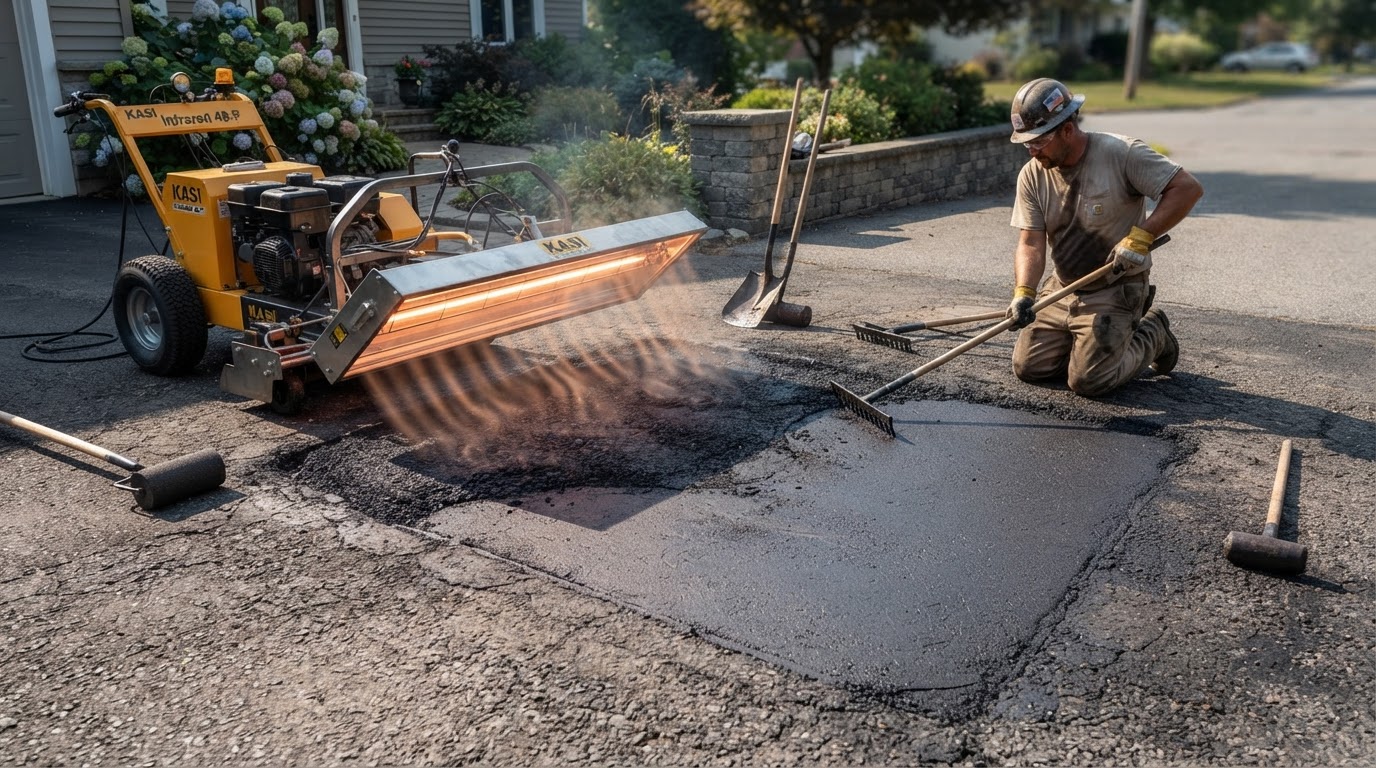
The process uses a specialized infrared heater mounted on a truck or trailer. The heater directs intense infrared radiation onto the damaged asphalt, penetrating the surface and heating it to roughly 300°F to 350°F to a depth of two to three inches. At this temperature, the aged asphalt binder softens and becomes workable again, without burning or oxidizing the material. This is the key innovation: the existing asphalt is not removed and discarded; it is rejuvenated and reincorporated into the repair.
Once the asphalt is heated, the crew scarifies (loosens and rakes) the softened material, removing any debris or failed aggregate. A rejuvenator liquid is often sprayed onto the heated asphalt to restore some of the volatile oils lost to oxidation over the years, improving the flexibility and adhesion of the recycled material. Fresh hot-mix asphalt is then added to bring the patch up to grade, and the entire area—old and new material together—is mixed, leveled, and compacted as one homogeneous mass.
Because the new and old asphalt are blended at temperature and compacted together, there is no cold joint. The patch becomes a monolithic, seamless part of the surrounding pavement, with the same density and flexibility as the original surface. Water cannot infiltrate at the edges because there are no edges—only a continuous asphalt mat. This is why infrared patches can last five to ten years or more, compared to the one-to-two-year life of a traditional saw-cut patch with a cold joint.
Infrared repair is particularly well-suited to certain types of damage. Potholes, alligator cracking in localized areas, sunken utility cuts, surface deterioration around catch basins, and rough transitions at driveway aprons are all ideal candidates. The technology excels at repairing damage that is confined to the surface and upper layers of the pavement, where heating can reach the full depth of the problem. It is less effective for damage caused by deep base failure, where the structural problem lies below the reach of the infrared heat.
The environmental and cost benefits are significant. Because infrared repair reuses the existing asphalt, it requires far less new material than a traditional patch or a full saw-cut removal. There is no need to haul away and dispose of excavated asphalt, and the reduced material and trucking needs lower both the cost and the carbon footprint of the repair. For a homeowner with a few potholes or a deteriorated section, infrared patching is often the most economical repair that does not require a full overlay or reconstruction.
Timing and weather still matter. Infrared repair is best performed in warm weather when the asphalt is already somewhat pliable, though the heater can be used in cooler conditions with longer heating times. The surface must be dry, as moisture turns to steam and can prevent proper bonding. The repair should be compacted with a vibratory plate or roller to achieve the density needed for durability, and the area should be kept free of traffic until the asphalt has cooled—typically 30 minutes to an hour.
For homeowners evaluating repair options, infrared asphalt repair occupies a valuable middle ground between a temporary cold-patch fill and a full overlay. It provides a permanent, seamless, water-resistant repair at a fraction of the cost of resurfacing the entire driveway. When the damage is localized and the base is sound, infrared patching can extend the life of an asphalt driveway by years, delaying the need for a more expensive overlay or replacement and keeping the surface safe and attractive in the meantime.
Looking for a qualified contractor? Browse our directory of driveway resurfacing professionals specializing in infrared asphalt repair & patching. Compare services, request quotes, and find the right specialist for your project.
 Advertisement
Explore Infrared Asphalt Repair & Patching
Seamless thermal asphalt recycling and pothole elimination.
Browse Infrared Asphalt Repair & Patching