Polyaspartic vs. Epoxy Driveway Coatings: Hot-Tire Pick Up Defense
Why polyaspartic coatings resist hot tires and UV yellowing better than standard garage epoxies on exterior driveways.
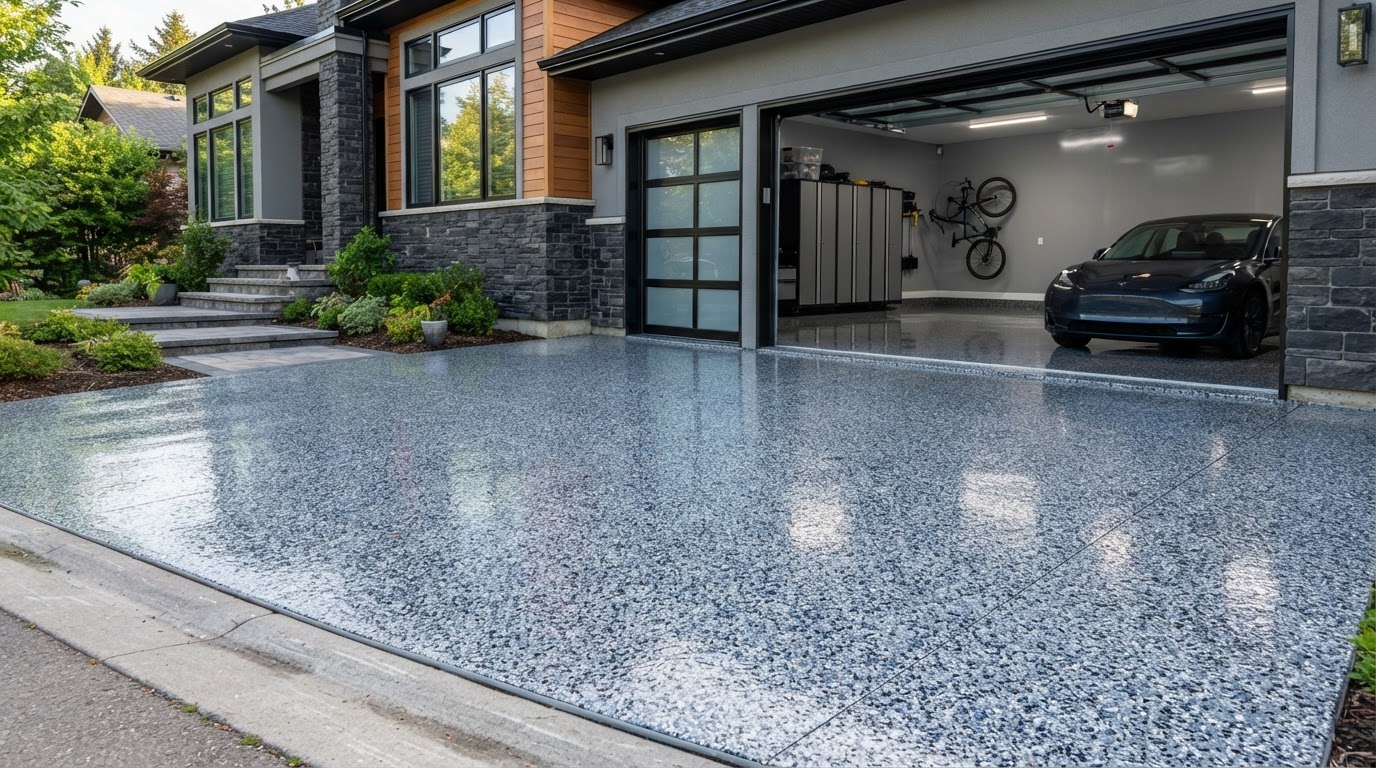
Polyaspartic topcoats flex with driveway thermal expansion and withstand hot vehicle tires without peeling or yellowing in sunlight. These properties have made polyaspartic coatings the preferred choice for exterior driveway surfaces and high-performance garage floors, displacing the standard two-part epoxy systems that dominated the market for decades. Understanding why polyaspartic outperforms epoxy helps homeowners choose the right coating for a surface that must endure temperature swings, UV exposure, and the heat of tires driven straight off the road.
The core difference is chemistry. Epoxy coatings cure through a reaction between an epoxy resin and a polyamine hardener, producing a hard, rigid film with excellent chemical resistance and adhesion. However, epoxy is inherently susceptible to UV light, which breaks down the polymer chains over time and causes the clear coat to amber or yellow. Epoxy also remains somewhat thermoset and brittle, meaning it does not flex well when the substrate expands and contracts. On an exterior driveway, where the surface temperature can swing 80 degrees in a single day, that rigidity leads to micro-cracking and eventual delamination.
Polyaspartic coatings are a type of polyurea—a fast-curing, aliphatic polymer. The aliphatic chemistry is UV-stable, meaning the coating will not yellow or chalk even after years of direct sun exposure. Polyaspartics are also more flexible than epoxy, allowing them to bridge hairline cracks and accommodate the thermal movement of concrete without losing adhesion. This flexibility is the key to their resistance to hot-tire pickup: when a hot tire sits on the coating, the coating flexes with the slight expansion of the concrete rather than bonding to the rubber and tearing away when the car moves.
Hot-tire pickup is the failure mode that most often ruins epoxy garage and driveway coatings. When a vehicle is driven and then parked, the tires are hot, and the heat softens the coating beneath them. If the coating is not fully cured or is too rigid, the tire bonds to the softened coating and peels it away when the car is moved, leaving ugly bare patches. Polyaspartic coatings resist this because they cure to a harder, more heat-resistant surface and because their flexibility prevents the brittle failure that lets the coating lift with the tire.
Cure time is another major advantage. Standard epoxy systems require 24 to 72 hours before foot traffic and up to a week before vehicle traffic, during which the surface is vulnerable to dust, insects, and damage. Polyaspartic coatings can cure to foot-traffic hardness in as little as one to two hours and accept vehicle traffic in 24 hours. This rapid cure means a driveway can be coated and returned to service in a single day, a significant logistical advantage for homeowners who cannot go days without parking access.
The installation process for both systems depends heavily on surface preparation. The concrete must be ground or shot-blasted to open the pores and remove any existing sealer, paint, or curing compound. Cracks are filled with a polyurea joint filler, and any spalling or pitting is repaired with a polymer-modified patching compound. A primer is applied to ensure adhesion, followed by the base coat. For decorative finishes, color flakes or metallic pigments are broadcast into the wet base coat, and a clear topcoat—polyaspartic for exterior use—locks everything in. Skipping or shortcutting surface preparation is the most common cause of coating failure, regardless of the product used.
For exterior driveways specifically, polyaspartic is almost always the better choice because of its UV stability. An epoxy-coated driveway exposed to direct sun will begin to yellow and chalk within a year, dulling the color and degrading the surface. A polyaspartic-coated driveway retains its clarity and color for years. Polyaspartic is also more resistant to de-icing salts, automotive fluids, and abrasion, all of which are daily realities for a driveway surface. The higher material cost of polyaspartic is offset by its longer service life and lower likelihood of premature failure.
Maintenance of a polyaspartic-coated driveway is minimal but important. The surface should be kept clean of abrasive debris, and harsh chemical de-greasers should be avoided. While polyaspartic is highly stain-resistant, prompt cleanup of oil, gas, and other automotive fluids prevents any long-term discoloration. With proper installation and basic care, a polyaspartic driveway coating can last 10 to 15 years—far longer than a typical epoxy system exposed to the same conditions—making it the superior investment for any exterior concrete surface that must withstand sun, heat, and traffic.
Looking for a qualified contractor? Browse our directory of driveway resurfacing professionals specializing in epoxy & polyurea driveway coatings. Compare services, request quotes, and find the right specialist for your project.
 Advertisement
Explore Epoxy & Polyurea Driveway Coatings
Industrial-grade polyaspartic and flake coating systems for residential driveways.
Browse Epoxy & Polyurea Driveway Coatings