
2026-09-05
Restoring Interlocking Brick Pavers with Polymeric Sand & Sealer
Step-by-step restoration of sunken paver driveways, weed elimination, and satin-finish paver sealers.
Read Guide → Advertisement
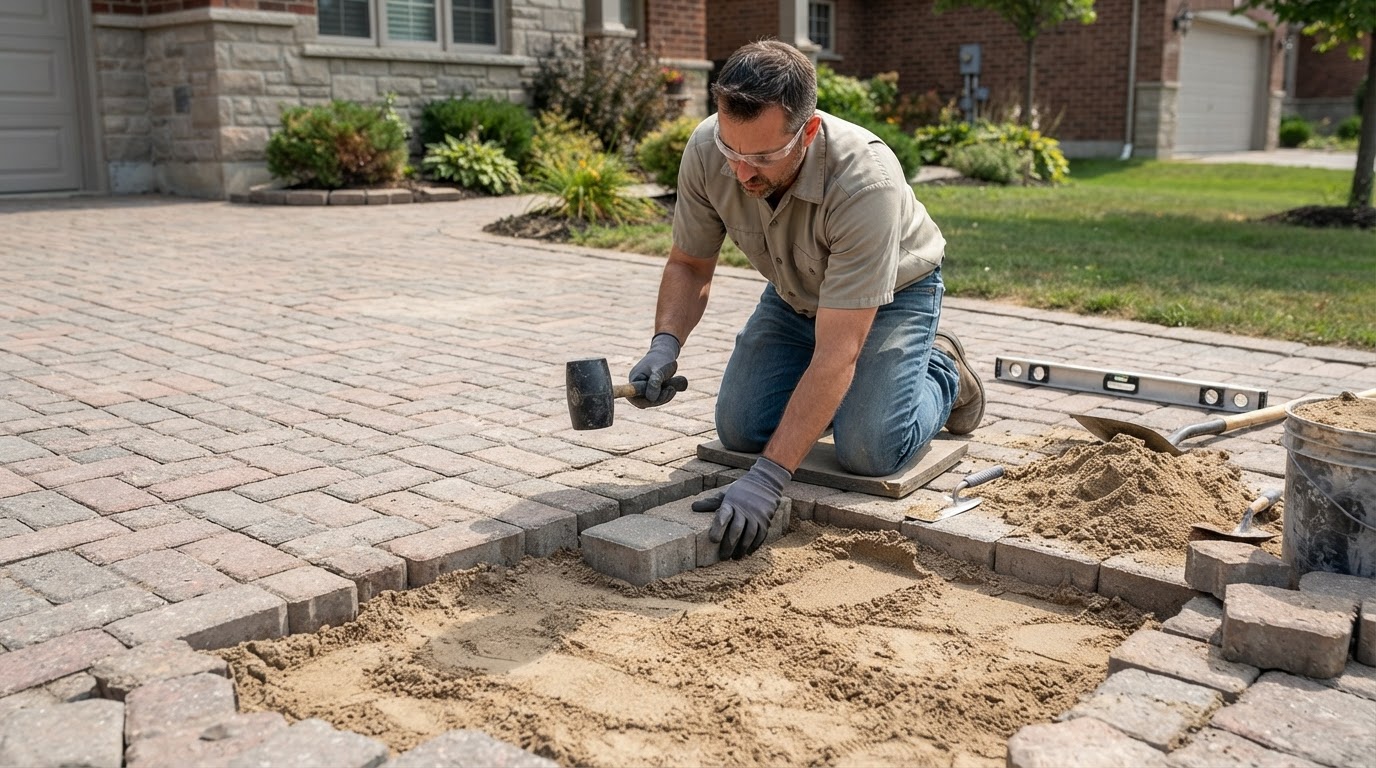
Targeted lift-and-reset techniques that restore grade without the cost of a full paver re-lay.
Sunken paver sections usually result from base failure or water undermining the bedding sand. Instead of relaying the entire driveway, a contractor lifts only the affected pavers, recompacts the base, and resets the stones at the correct elevation. This targeted repair is one of the great advantages of a paver driveway over a monolithic asphalt or concrete surface: individual units can be removed, the underlying problem corrected, and the same pavers reset, often invisibly, at a fraction of the cost of a full re-lay. Understanding the technique helps homeowners decide when a localized repair is sufficient and when a more extensive intervention is needed.
The first step is diagnosing the cause of the settlement. A sunken section is a symptom, not the problem itself. The most common causes are base inadequacy—insufficient base depth, poor compaction, or the wrong aggregate gradation; water infiltration—runoff undermining the bedding sand or washing out the base; or a utility issue—a settling sewer or water line beneath the driveway. Before any paver is lifted, the contractor should identify and address the root cause. Resetting pavers over an unresolved base or drainage problem guarantees the section will sink again. A proper diagnosis may involve checking the slope, the adjacent drainage, and the base material.
Once the cause is identified, the repair begins by removing the pavers in the affected area. Pavers are lifted carefully—using a paver extractor or by prying with two flat-blade screwdrivers—to avoid chipping the edges, and they are set aside in order so they can be returned to their original positions. The bedding sand beneath is removed, exposing the base. If the base has settled, washed out, or was inadequately compacted, it is reworked: additional aggregate is added if needed, the base is moistened and compacted with a plate compactor to the correct density, and the grade is re-established to match the surrounding surface.
If water was the cause, the drainage correction happens at this stage. A French drain, a surface channel, or a regraded swale may be installed along the edge of the driveway to intercept and divert the runoff that was undermining the base. The base is then rebuilt with the correct aggregate—typically a crushed, angular stone that compacts densely and drains well—and sloped to shed water rather than trap it. Without this drainage correction, the repaired section will sink again as soon as the next heavy rain repeats the undermining. This is why a contractor who only resets the pavers without addressing the water is offering a temporary fix.
With the base corrected and compacted, the bedding sand is replaced. The bedding layer—typically 1 inch of sharp, angular bedding sand—is screeded to a precise, uniform grade that will bring the reset pavers flush with the surrounding surface. The screeding must be exact, because the pavers will sit at whatever elevation the sand bed establishes. A slight over-fill will leave the reset section proud; an under-fill will leave it low. Experienced contractors use screed rails or pipes set to the correct height to ensure a perfectly uniform bed, and they check the grade with a straightedge before laying any pavers.
The saved pavers are then reset in their original pattern and order. Each paver is placed and tapped into the bedding sand with a rubber mallet to seat it firmly and bring it to the exact elevation of the surrounding surface. The joints are checked for consistent width, and the surface is checked with a straightedge to ensure it is flat and flush. Once all the pavers are reset, the entire area is compacted with a plate compactor fitted with a rubber mat to vibrate the pavers into the bedding sand and lock them in place. This compaction is what establishes the interlock that gives a paver driveway its structural integrity.
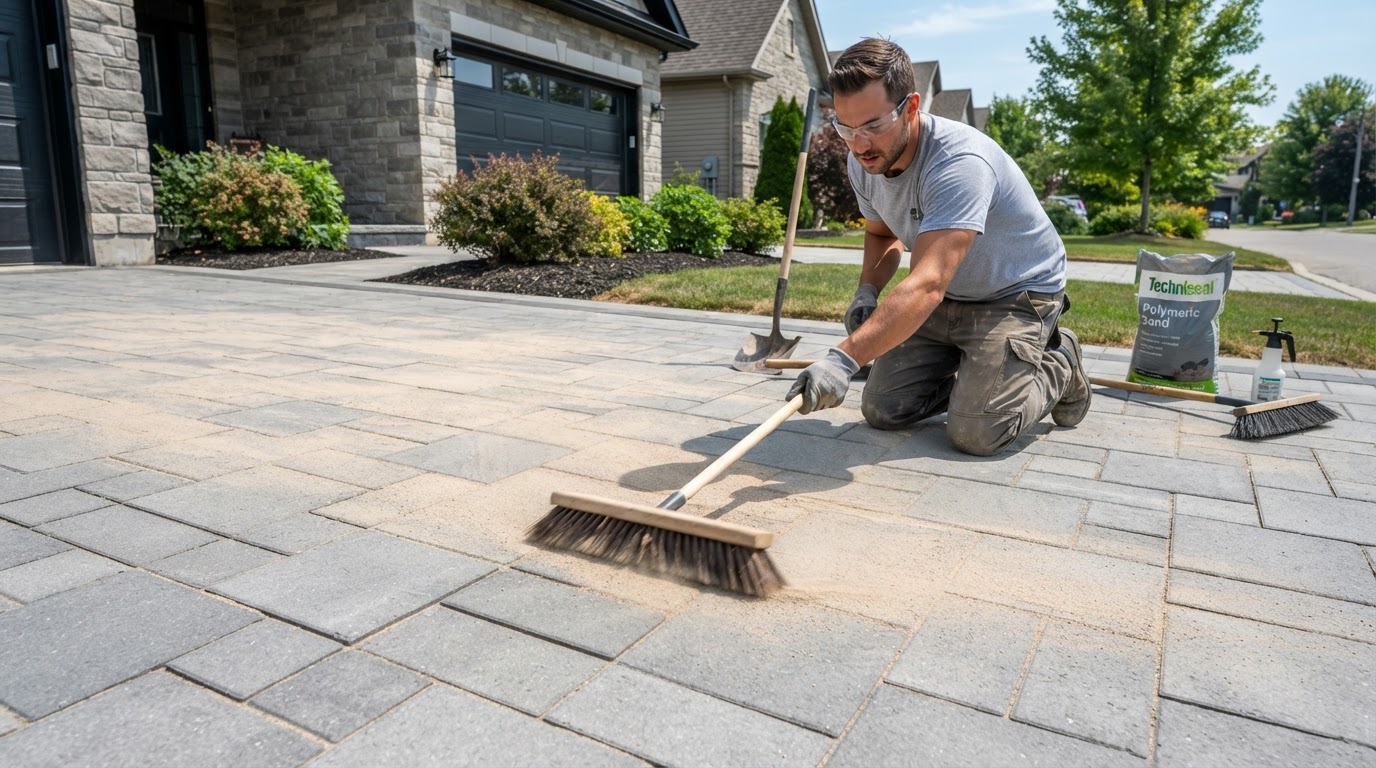
New polymeric joint sand is then swept into the joints and activated with water to lock the reset pavers in place, preventing weed growth and future shifting. The polymeric sand bonds the pavers together at the joints, restoring the interlock that was lost when the sand washed out. The joints are filled completely, the excess sand is swept off the surface, and the area is misted to activate the polymer. Once cured, the reset section is indistinguishable from the surrounding driveway—the same pavers, the same pattern, the same color, now sitting at the correct elevation on a corrected base.
The cost of a targeted lift-and-reset is a fraction of the cost of a full paver re-lay, because only the affected area is disturbed and the existing pavers are reused. This is one of the key economic advantages of paver driveways: they are repairable in a way that monolithic surfaces are not. A sunken asphalt or concrete section requires saw-cutting, excavation, and a patch that is often visible; a sunken paver section can be reset invisibly. For homeowners with a paver driveway, the takeaway is that a localized settlement does not require a full re-lay—a qualified contractor can diagnose the cause, correct the base and drainage, and reset the pavers to restore a level, stable surface at a reasonable cost.
Looking for a qualified contractor? Browse our directory of driveway resurfacing professionals specializing in paver resurfacing & restoration. Compare services, request quotes, and find the right specialist for your project.
AdvertisementStep-by-step restoration of sunken paver driveways, weed elimination, and satin-finish paver sealers.
Read Guide →Interlocking paver cleaning, polymeric sand re-pointing, and sealing.
Browse Paver Resurfacing & Restoration