
2026-07-18
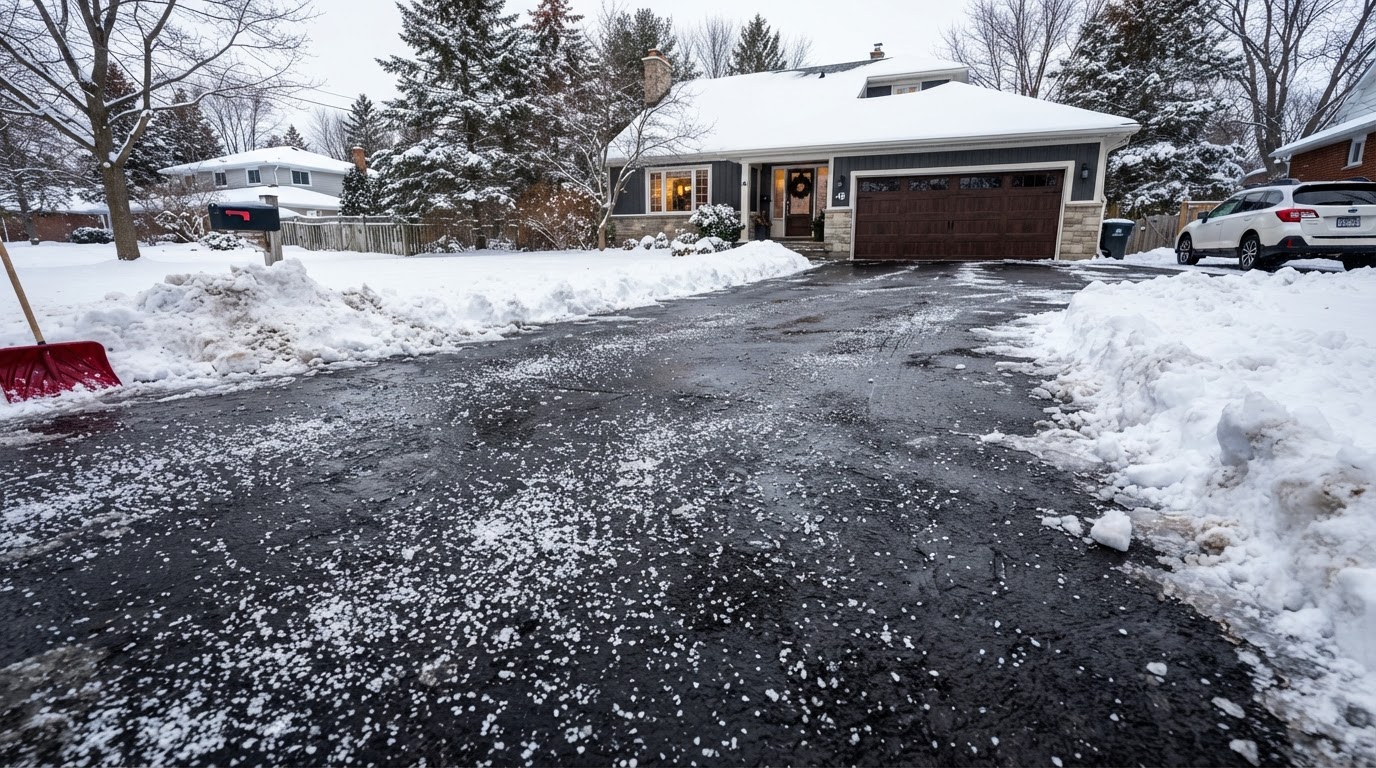
Protecting Your Asphalt Driveway From Winter De-Icing Salt Damage
Which de-icers are safe for asphalt and which accelerate freeze-thaw cracking and surface deterioration.
Read Guide → Advertisement
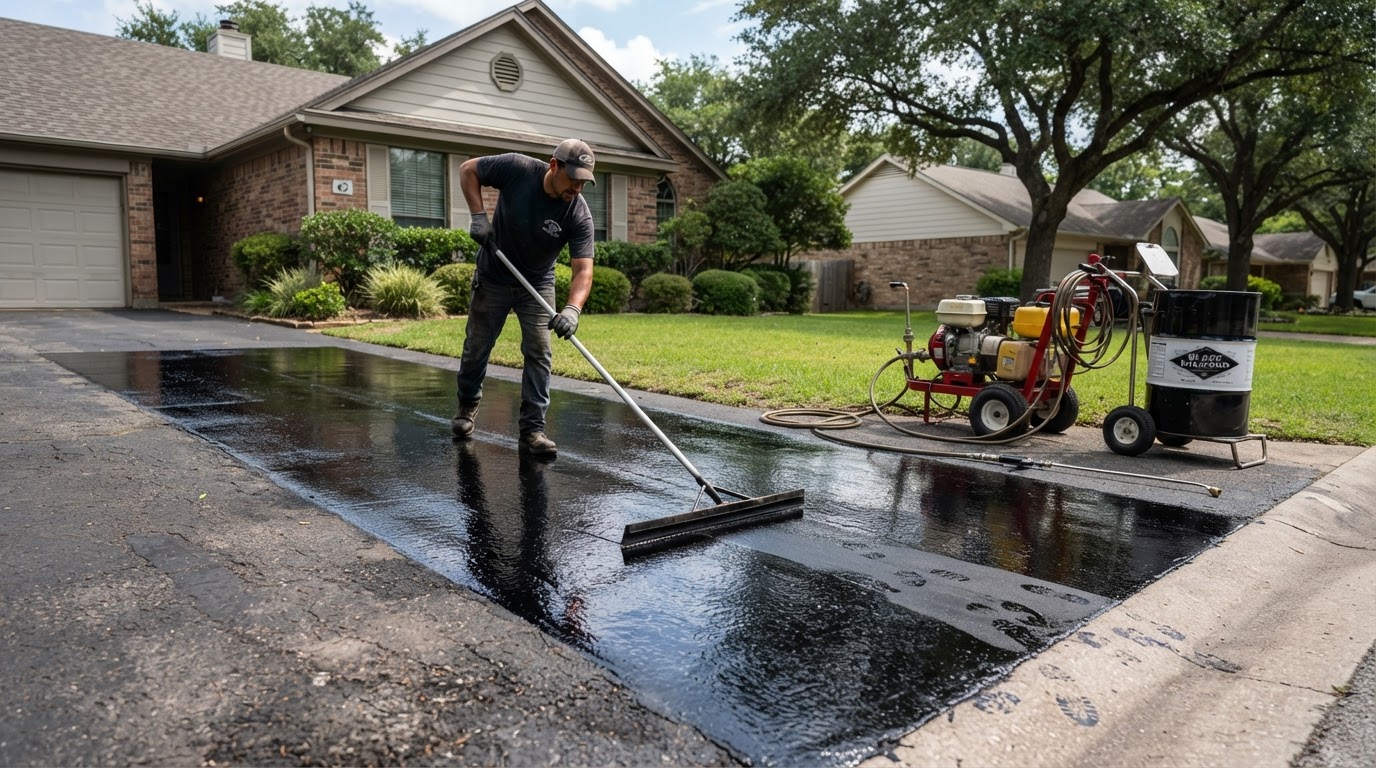
Learn the optimal sealcoating schedule, temperature requirements, and emulsion formulas to protect asphalt from UV oxidation and automotive fluids.
Applying a sealcoat every 2 to 3 years prevents oil penetration, halts sun bleaching, and seals minor hairline cracks before winter frost-heave cycles expand them. Sealcoating is the single most cost-effective maintenance step a homeowner can take to extend the life of an asphalt driveway, yet it is often misunderstood, over-applied, or done at the wrong time of year. Understanding the product, the schedule, and the conditions that produce a durable result is essential.
Sealcoat is a coal-tar or asphalt-emulsion based liquid that is squeegeed or sprayed onto the asphalt surface. It fills the tiny voids in the asphalt matrix, restores the deep black color that fades as the binder oxidizes, and creates a protective barrier against water, oxygen, UV radiation, and petroleum products. Without this barrier, the asphalt binder at the surface dries out, becomes brittle, and begins to ravel—losing aggregate and developing the characteristic grey, rough texture of aged pavement.
The ideal sealcoating schedule depends on climate and traffic. In moderate climates, every three years is usually sufficient. In regions with harsh winters, heavy freeze-thaw cycling, or abundant de-icing salt, a two-year cycle is safer. A new asphalt driveway should not be sealed immediately; it needs 90 to 120 days to fully cure and for the light oils to evaporate from the surface. Sealing too soon traps those oils and can cause the sealcoat to peel or track. After the first application, the regular cycle can begin.
Temperature and weather at the time of application are critical. Sealcoat must be applied when surface and air temperatures are above 50°F and rising, with no rain forecast for at least 24 hours—ideally 48. The product needs warm, dry conditions to cure properly and bond to the asphalt. Applying sealcoat in cool weather, high humidity, or just before rain prevents proper curing and results in a soft, streaky, or washed-off surface. Most reputable contractors sealcoat only during the warmer months and will reschedule if conditions are marginal.
Coal-tar emulsion and asphalt-emulsion are the two main product families. Coal-tar sealers historically offered superior fuel and oil resistance and a darker, longer-lasting finish, but environmental and health concerns have led many municipalities to restrict or ban coal-tar products. Asphalt-emulsion sealers are more environmentally friendly, lower in volatile organic compounds, and increasingly the standard in regulated areas. Both can be fortified with polymer additives and silica sand for improved durability, flexibility, and slip resistance. A contractor should be able to explain which product they use and why.
Preparation is what separates a professional job from a DIY failure. The driveway must be thoroughly cleaned—pressure-washed or power-broomed—to remove dirt, algae, and loose material. Oil and gas stains must be treated with a degreaser and primed with a specialty bonding agent, because sealcoat will not adhere to petroleum-contaminated asphalt. Any cracks should be filled with a hot-pour rubberized sealant before sealing; sealcoat is too thin to bridge cracks and will simply crack over them. Edges should be masked, and the surrounding concrete or landscaping protected from overspray.
Application method affects the result. Squeegee application forces the sealer into the asphalt pores and lays down a thicker, more uniform coat, which is ideal for smooth residential driveways. Spray application is faster and better suited to large, open commercial lots with rough or porous surfaces. Many crews use two thin coats rather than one thick coat, allowing each to dry before the next is applied. Two thin coats cure more completely and last longer than a single heavy coat that stays soft in the middle and wears unevenly.
After sealing, the driveway must be kept free of vehicle traffic for 24 to 48 hours and foot traffic for at least 12 hours, depending on the product and weather. Driving on a not-fully-cured sealcoat leaves permanent tire marks and can track sealer into garages and onto adjacent surfaces. Once cured, a properly sealed driveway will have a rich, uniform black finish that resists staining, sheds water, and hides minor imperfections—restoring the appearance of a driveway that is years old and protecting the investment for years to come.
Looking for a qualified contractor? Browse our directory of driveway resurfacing professionals specializing in driveway sealcoating & protection. Compare services, request quotes, and find the right specialist for your project.
AdvertisementWhich de-icers are safe for asphalt and which accelerate freeze-thaw cracking and surface deterioration.
Read Guide →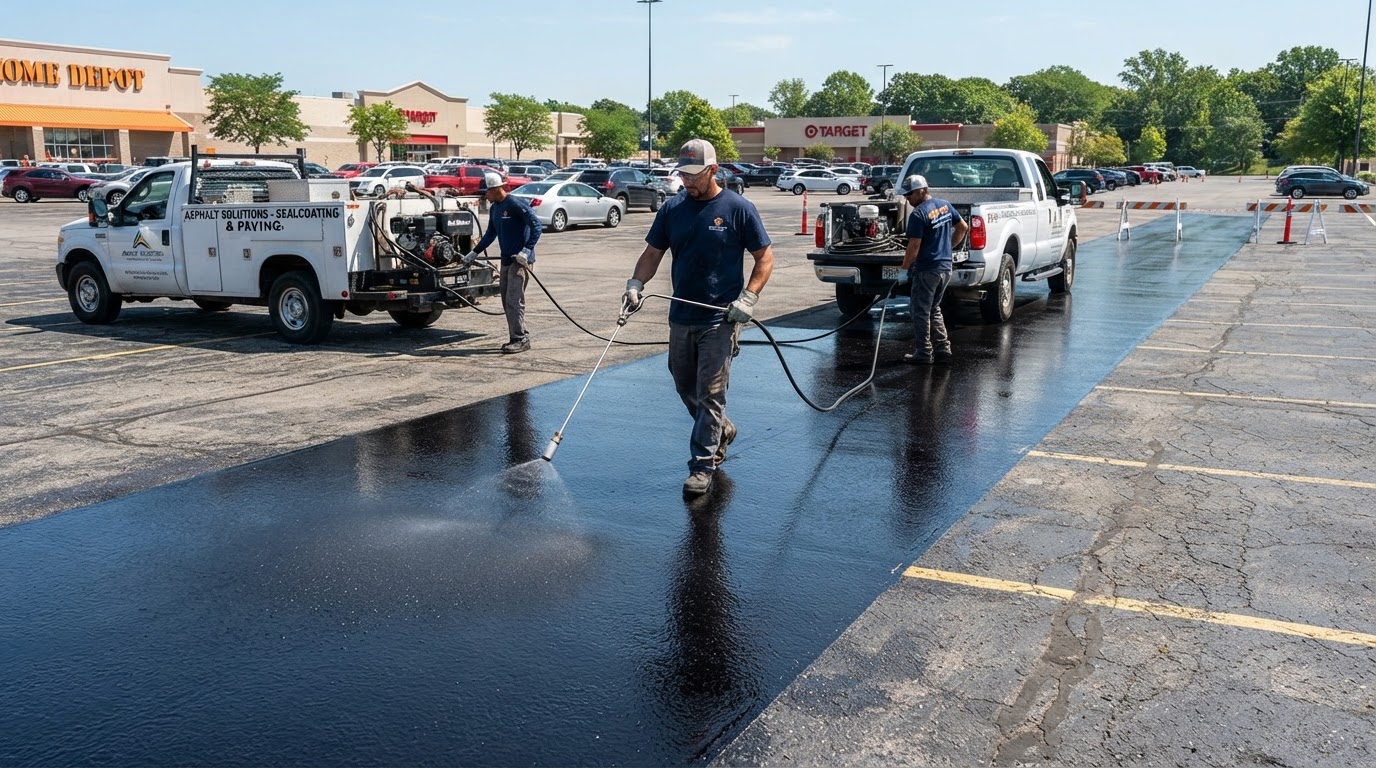
How application method, material grade, and crew size affect coverage uniformity on residential and large commercial driveways.
Read Guide →Coal-tar-free sealcoat application, UV defense, and weatherproof sealants.
Browse Driveway Sealcoating & Protection