
2026-09-18
How Often Should You Sealcoat Your Asphalt Driveway?
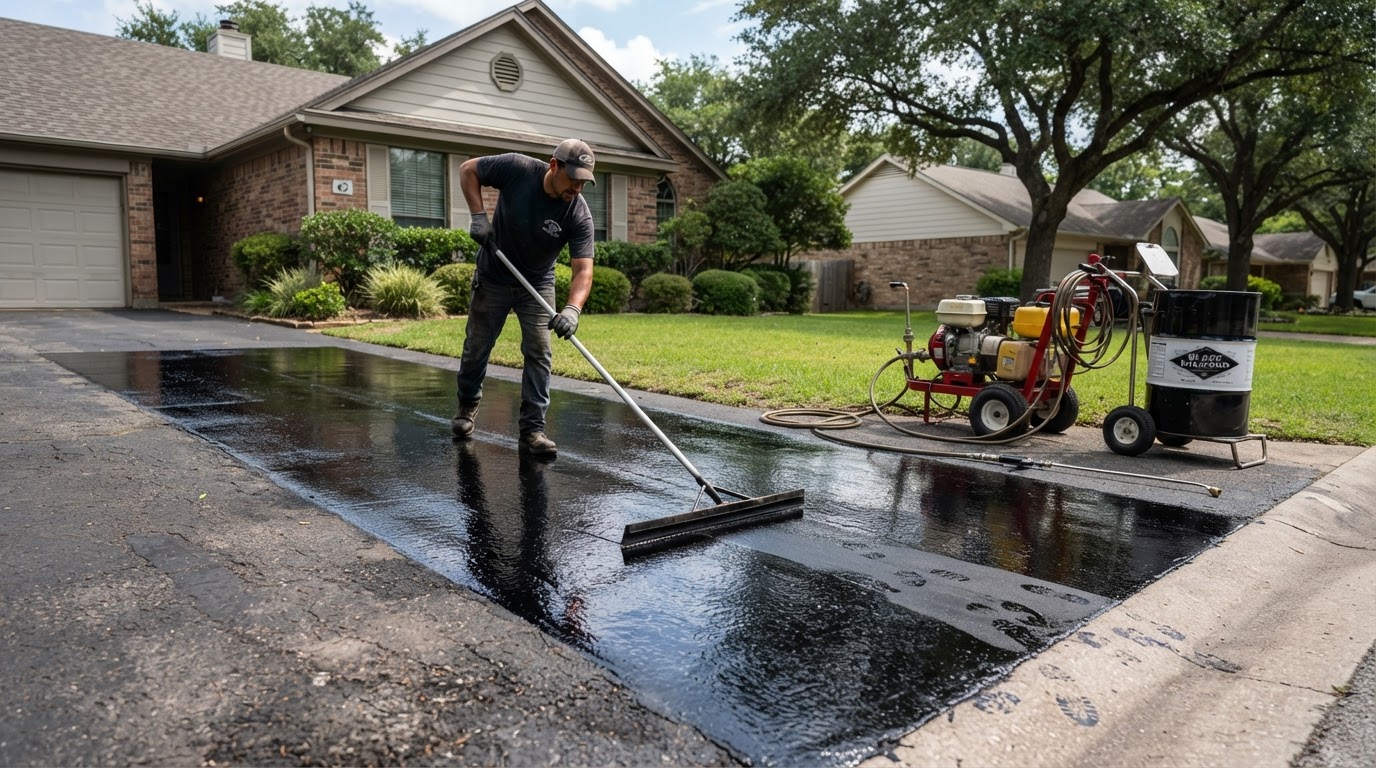
Learn the optimal sealcoating schedule, temperature requirements, and emulsion formulas to protect asphalt from UV oxidation and automotive fluids.
Read Guide → Advertisement
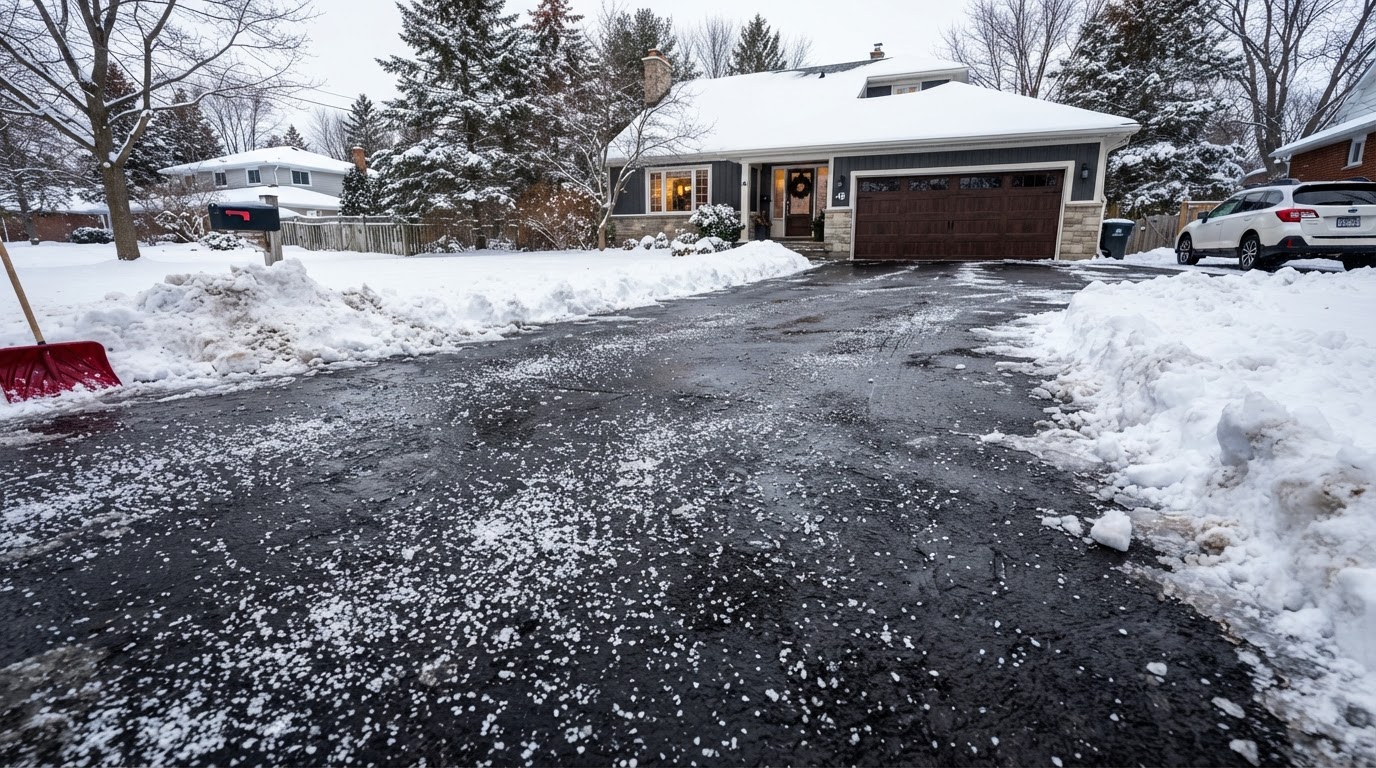
Which de-icers are safe for asphalt and which accelerate freeze-thaw cracking and surface deterioration.
Sodium chloride rock salt is generally safe for asphalt in moderation, but calcium chloride blends melt at lower temperatures and can drive chloride deep into micro-cracks, worsening freeze-thaw damage. Winter de-icing is a necessity for safety on any driveway that sees ice and snow, but the choice of de-icer and how it is used has a direct impact on the lifespan of the pavement beneath. Understanding the chemistry of the common de-icing products helps homeowners protect their driveways while keeping them safe to walk and drive on.
Sodium chloride—ordinary rock salt—is the most widely used de-icer and, for asphalt specifically, is the safest choice when used in moderation. It works by lowering the freezing point of water, melting ice down to about 15°F to 20°F. Sodium chloride does not chemically attack the asphalt binder; the primary risk it poses is the freeze-thaw cycling it creates as melted brine refreezes overnight. A properly sealcoated asphalt driveway resists this brine penetration, which is why applying a protective coat before the first freeze extends pavement life in cold-climate regions.
Calcium chloride and magnesium chloride are more aggressive de-icers that melt ice at much lower temperatures—down to -20°F or below—and work faster than rock salt. However, these chlorides are hygroscopic, meaning they attract and hold moisture, and they can drive chloride ions deep into the micro-pores and hairline cracks of both asphalt and concrete. In concrete, chlorides react with the paste and can accelerate surface scaling and spalling. In asphalt, the repeated wet-dry cycling and the lower freezing point of the residual brine can extend the period during which the pavement is saturated and vulnerable to freeze-thaw damage. For driveways, these products should be used sparingly and only when temperatures truly require their lower melting point.
The freeze-thaw cycle is the real enemy, not the salt itself. When water enters a crack or pore in the pavement and freezes, it expands by about 9%, exerting enormous pressure that widens the crack and breaks off small pieces of the surface. Each thaw refills the crack with more water, and each freeze expands it further. De-icing salts, by creating liquid brine, increase the number of freeze-thaw cycles the pavement experiences in a single winter—every time the brine melts and refreezes, the pavement takes another cycle of damage. This is why a driveway with even minor cracking deteriorates faster in a cold, wet climate than in a dry one.
Sealcoating is the primary defense against salt and brine damage. A fresh, intact sealcoat fills the surface voids and creates a barrier that slows the penetration of water and dissolved salts into the asphalt. A driveway that is sealcoated every two to three years will absorb far less brine than one that is left bare, and the freeze-thaw damage will be correspondingly less severe. The best time to sealcoat is in the late summer or early fall, so the fresh coat has cured fully before the first de-icing salts are applied.
Crack sealing is the second critical defense. Every crack is a direct path for brine to reach the base, and the freeze-thaw cycling in a crack is far more destructive than on the surface because the water is confined and the expansion pressure is concentrated. Sealing cracks with hot-pour rubberized sealant in the fall, before the first freeze, keeps brine out of the base and prevents the crack from widening over the winter. A driveway that enters winter with sealed cracks and a fresh sealcoat will emerge in the spring in far better condition than one that does not.
Application practices matter as much as product choice. More salt is not better—over-application leaves a residue that attracts moisture, creates a longer wet period, and increases the freeze-thaw cycling. The most effective approach is to apply just enough de-icer to break the bond between the ice and the pavement, then mechanically remove the loosened ice with a shovel or plow. This minimizes the amount of brine that remains on the surface and reduces the number of refreeze cycles. Avoid using sand or kitty litter alone on asphalt—they provide traction but do not melt ice, and the abrasive material can be ground into the surface under traffic, accelerating wear.
For homeowners in cold climates, the strategy for protecting an asphalt driveway through winter is straightforward: sealcoat and crack-seal before the first freeze, use sodium chloride in moderation as the primary de-icer, reserve calcium or magnesium chloride for the coldest days when rock salt is ineffective, apply the minimum effective amount, and remove loosened ice promptly. Combined with proper drainage and a sound base, these practices allow an asphalt driveway to survive decades of harsh winters without the premature cracking and raveling that plague driveways that are neglected through the cold months.
Looking for a qualified contractor? Browse our directory of driveway resurfacing professionals specializing in driveway sealcoating & protection. Compare services, request quotes, and find the right specialist for your project.
AdvertisementLearn the optimal sealcoating schedule, temperature requirements, and emulsion formulas to protect asphalt from UV oxidation and automotive fluids.
Read Guide →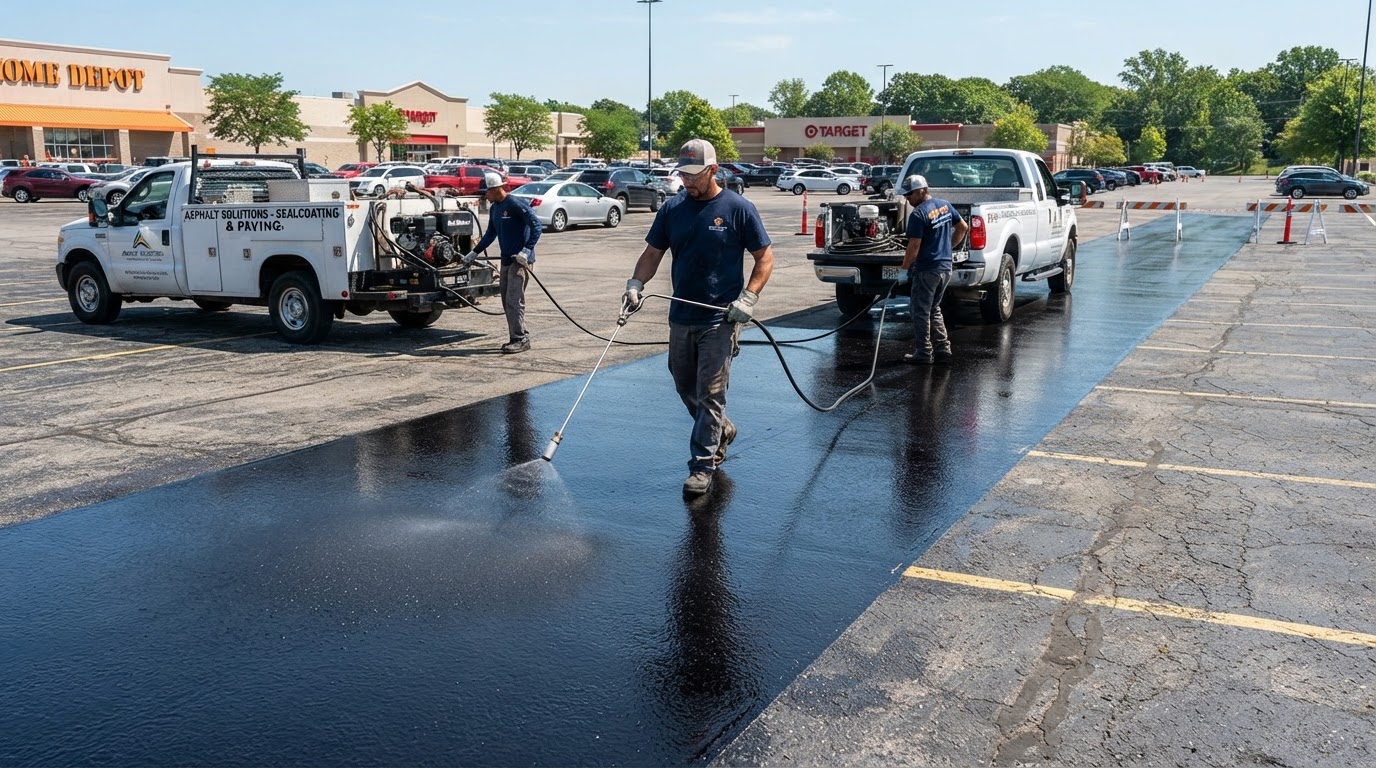
How application method, material grade, and crew size affect coverage uniformity on residential and large commercial driveways.
Read Guide →Coal-tar-free sealcoat application, UV defense, and weatherproof sealants.
Browse Driveway Sealcoating & Protection