
2026-09-18
How Often Should You Sealcoat Your Asphalt Driveway?
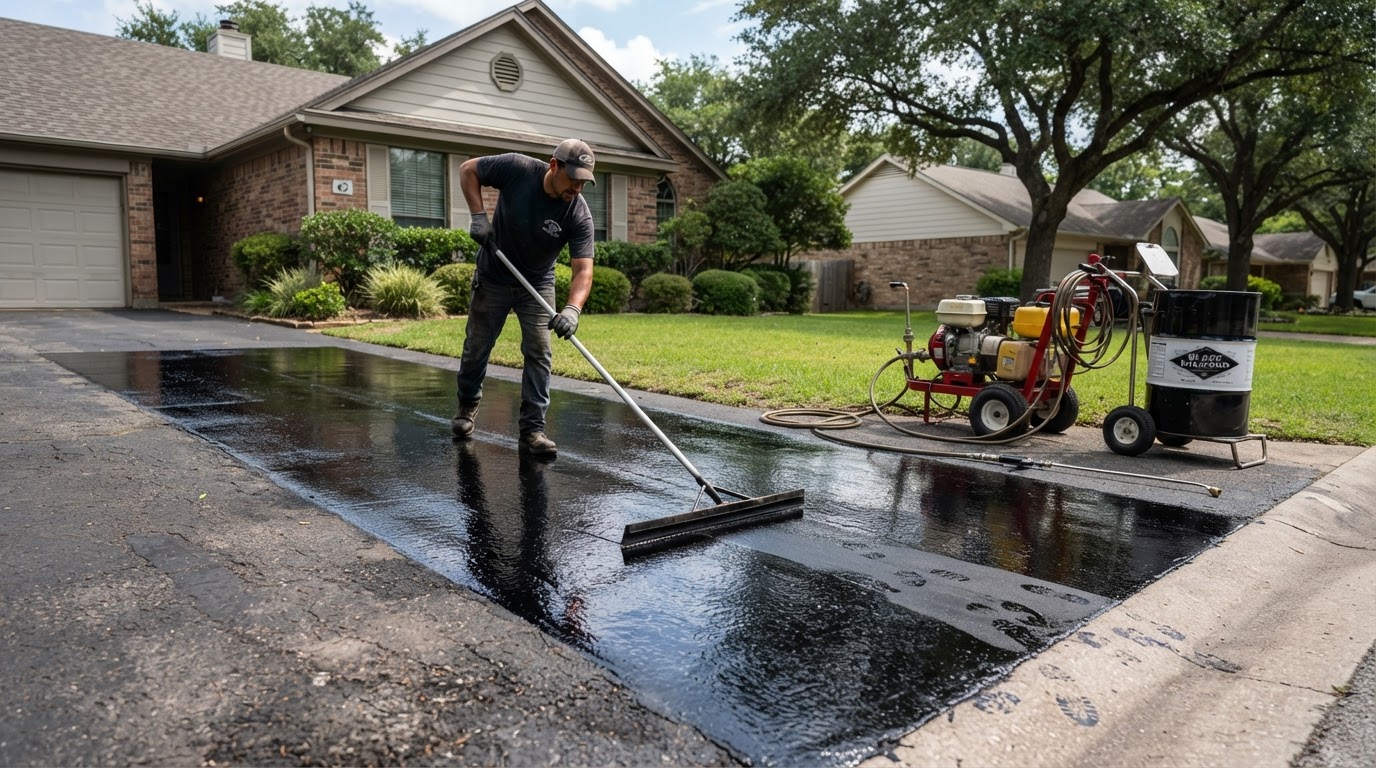
Learn the optimal sealcoating schedule, temperature requirements, and emulsion formulas to protect asphalt from UV oxidation and automotive fluids.
Read Guide → Advertisement
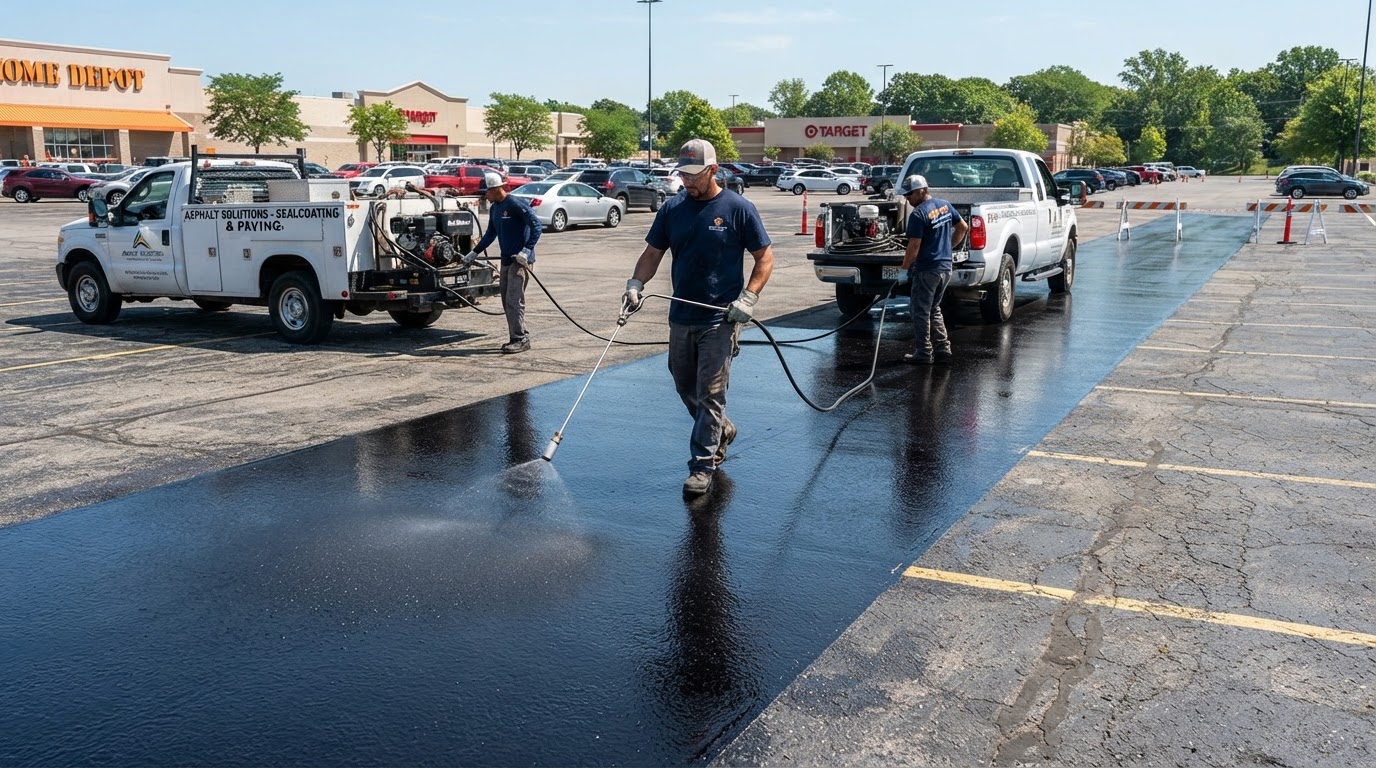
How application method, material grade, and crew size affect coverage uniformity on residential and large commercial driveways.
Squeegee application forces sealer into the asphalt voids and is ideal for smooth, residential driveways where a thick, even coat matters. Spray application covers large commercial lots quickly but applies a thinner film. The choice between these two application methods is not merely a matter of contractor preference—it affects the thickness, uniformity, and durability of the sealcoat, and the right method depends on the size, texture, and condition of the surface being sealed. Understanding the difference helps homeowners and property managers evaluate whether a contractor is using the appropriate technique for their driveway.
Squeegee application uses a rubber-bladed squeegee—either a hand squeegee for small areas or a ride-on squeegee machine for larger surfaces—to push the sealcoat across the asphalt. The physical pressure of the squeegee forces the sealer down into the voids and pores of the asphalt, ensuring thorough penetration and a thick, uniform film. On a smooth residential driveway, this produces a rich, even, deep-black finish with excellent coverage. The squeegee method is slower than spraying, but the quality and thickness of the resulting coat are superior, making it the preferred method for residential driveways where appearance and durability are the priority.
Spray application uses a spray wand or a ride-on spray system to atomize the sealcoat and apply it as a fine mist over the surface. Spray application is fast—a crew can cover a large commercial parking lot in a fraction of the time a squeegee would require—and it is well-suited to rough, open-textured, or porous surfaces where a squeegee would catch and leave streaks. However, spray application lays down a thinner film than squeegee, because the sealer sits on the surface rather than being forced into the voids. On a smooth residential driveway, a spray-applied coat may be thinner and less uniform, and it may not fill the fine surface voids as completely as a squeegeed coat.
The texture of the asphalt is a key factor in the method choice. A smooth, dense residential driveway—typical of a well-compacted residential pour—benefits from squeegee application, which fills the fine voids and produces a thick, even coat. A rough, open-textured surface—such as an older commercial lot with raveled aggregate, or a driveway with a coarse mix—may be better suited to spray, because a squeegee would catch on the rough texture and leave an uneven, streaky coat. Many experienced contractors assess the surface texture before choosing the method, and some use a combination: spray for large open areas and squeegee for edges and detail work.
Many crews combine both: spray for large open areas and squeegee along edges, shoulders, and corners where overspray onto concrete borders, curbs, or landscaping must be avoided. The edges of a driveway—where it meets a sidewalk, garage apron, or landscape bed—require careful, controlled application. A squeegee gives the operator precise control in these areas, preventing the sealer from splashing onto adjacent surfaces. The open center of a large driveway can be sprayed for speed, with the edges hand-squeegeed for precision. This hybrid approach delivers both efficiency and quality, and it is common on larger residential driveways and small commercial lots.
Material grade and mix design also affect the result. Sealcoat is rarely applied straight from the drum; it is typically mixed with water (to adjust viscosity), silica sand (for slip resistance and durability), and sometimes a polymer or latex additive (for improved flexibility and adhesion). The mix design must be matched to the application method: a squeegee mix is often thicker, with more sand, because the squeegee can handle the heavier body; a spray mix must be thinner to atomize properly, which means less sand and a thinner film. A contractor who uses the same mix for both methods, or who over-dilutes the material to make spraying easier, is compromising the quality of the coat.
Crew size and equipment determine how quickly and uniformly the job is done. A small residential driveway can be squeegeed by a two-person crew in a few hours, with one applying the sealer and the second doing edges and cleanup. A large commercial lot requires a larger crew, a spray rig or ride-on squeegee machine, and careful coordination to keep a wet edge and avoid lap marks. The quality of the result depends on the crew's experience and attention to detail as much as on the method and material. A well-trained crew produces a uniform, streak-free coat regardless of the method; an inexperienced crew can produce a streaky, uneven result with either.
For homeowners, the practical advice is to ask any sealcoating contractor which method they use and why, and to ensure the method matches the driveway. A smooth residential driveway should be squeegeed for the thickest, most uniform coat; a large or rough surface may warrant spray for practicality. Two thin coats—regardless of method—always outlast one thick coat, because each coat cures fully and bonds to the one beneath. With the right method, a properly formulated material, and an experienced crew, a sealcoat delivers the deep-black finish and protective barrier that extend the life of an asphalt driveway by years.
Looking for a qualified contractor? Browse our directory of driveway resurfacing professionals specializing in driveway sealcoating & protection. Compare services, request quotes, and find the right specialist for your project.
AdvertisementLearn the optimal sealcoating schedule, temperature requirements, and emulsion formulas to protect asphalt from UV oxidation and automotive fluids.
Read Guide →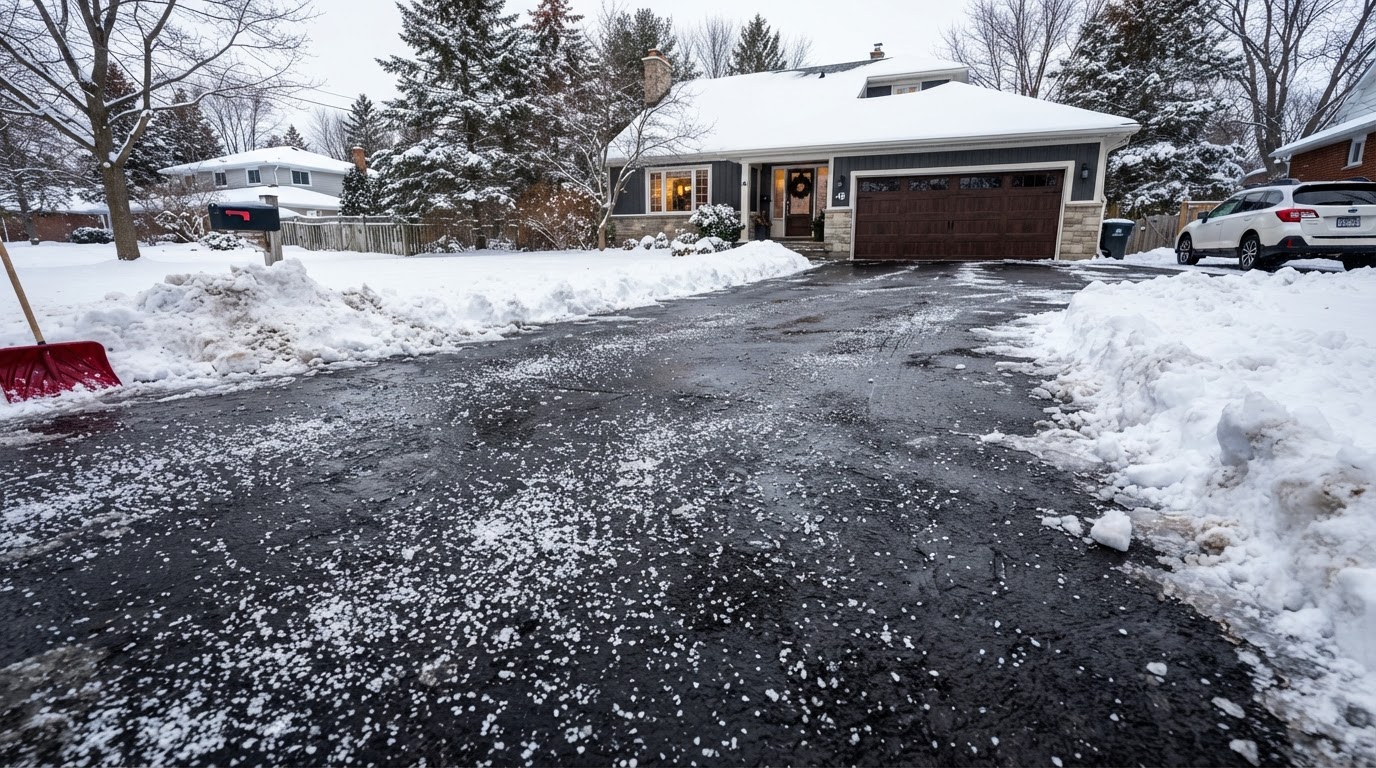
Which de-icers are safe for asphalt and which accelerate freeze-thaw cracking and surface deterioration.
Read Guide →Coal-tar-free sealcoat application, UV defense, and weatherproof sealants.
Browse Driveway Sealcoating & Protection