
2026-07-12
Crack Routing: Why Cutting a Clean Channel Before Sealing Lasts Twice as Long
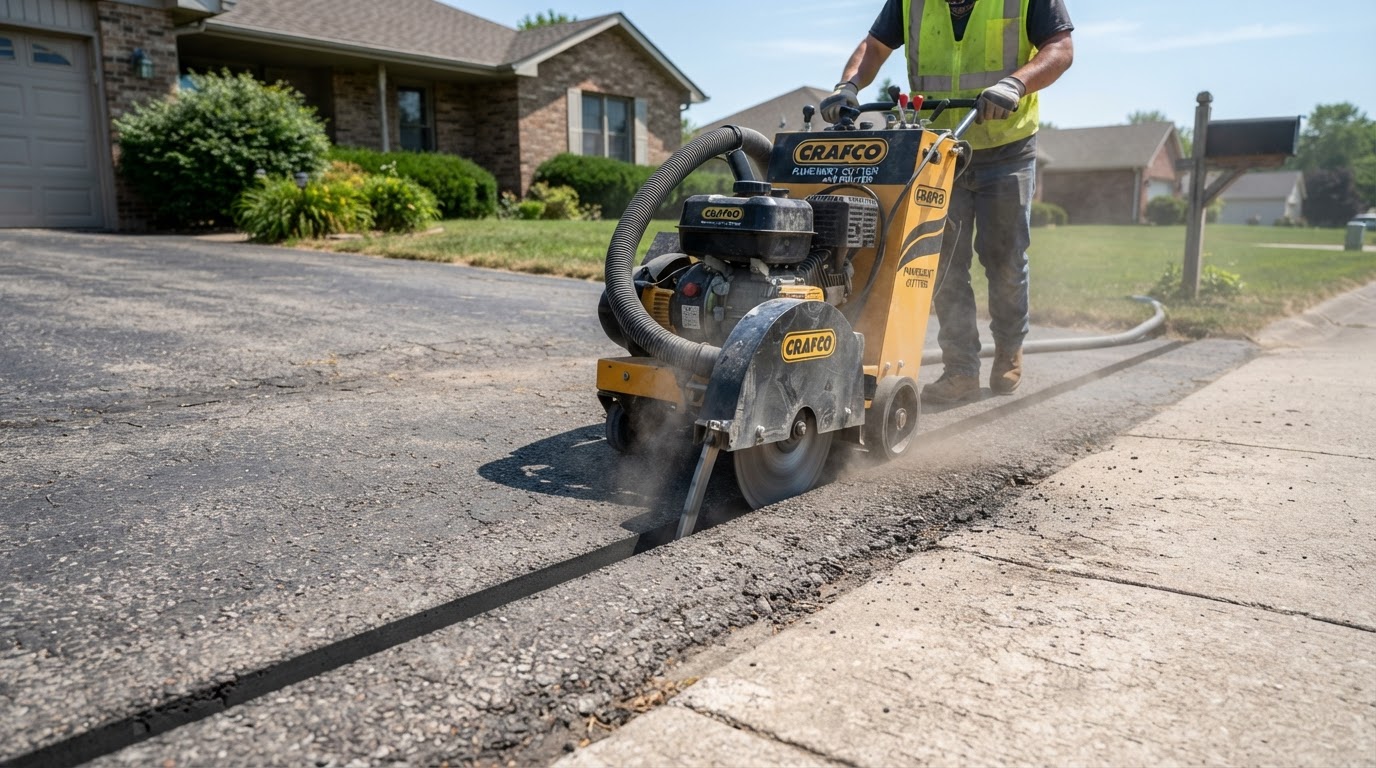
The professional method of saw-cutting cracks to a uniform width so rubberized sealant adheres and flexes properly.
Read Guide → Advertisement
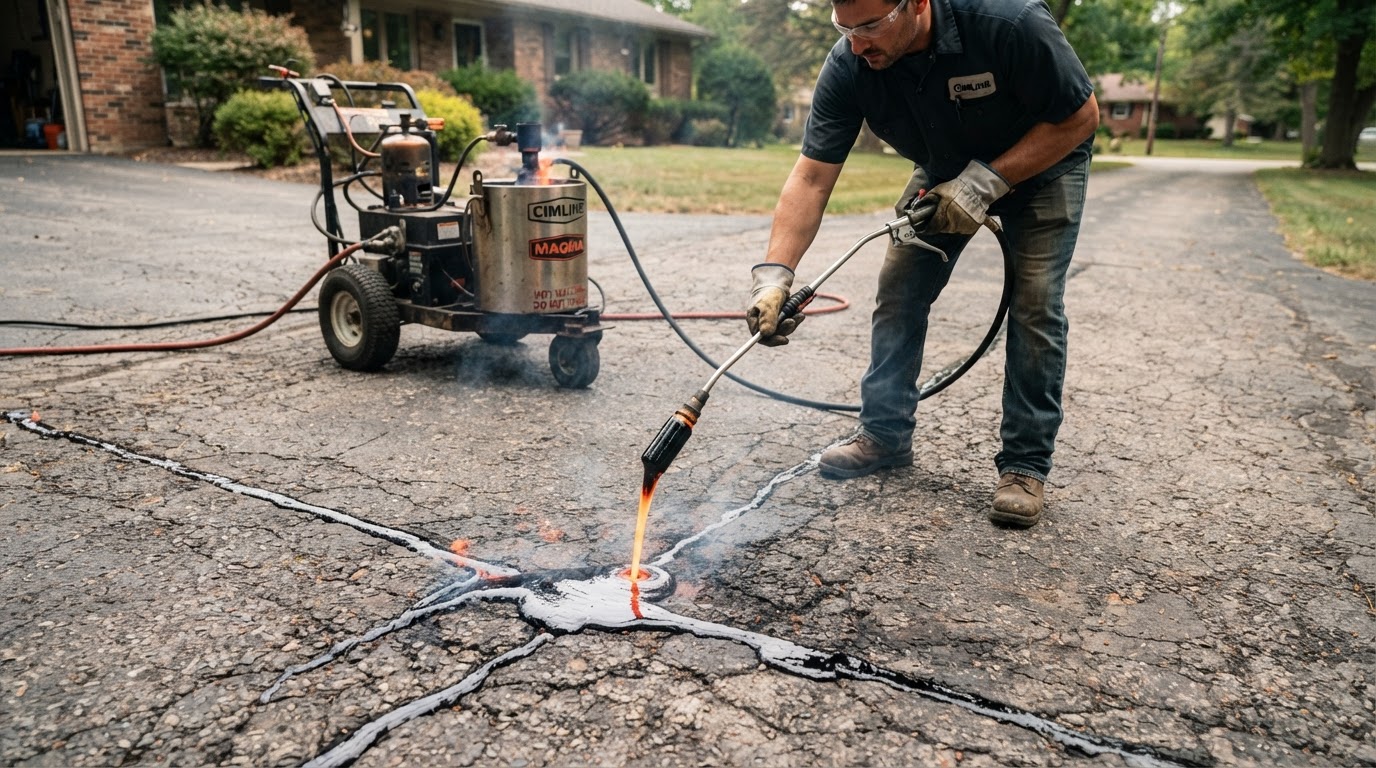
Why commercial contractors use 380°F hot-rubberized crack sealants to stop sub-base water damage.
Water intrusion under asphalt or concrete is the single leading cause of driveway collapse. Every crack in a driveway surface is a channel for rainwater, snowmelt, and irrigation runoff to reach the aggregate base beneath. Once water saturates the base, it softens, loses load-bearing capacity, and allows the pavement above to flex, settle, and eventually break apart. This is why crack sealing is not merely cosmetic—it is the first line of defense against structural failure, and the choice of filler material directly determines how long that defense lasts.
Hot-pour rubberized crack sealant remains flexible during freeze-thaw cycles, which is the key reason commercial contractors and municipalities rely on it. Heated in a melter to roughly 380°F, the sealant flows into routed cracks as a liquid and bonds to the sidewalls as it cools, forming a rubber-like plug that stretches and compresses with seasonal movement. A properly applied hot-pour sealant can last 5 to 8 years, far outperforming cold-applied alternatives that often pull away from the crack edges after a single winter.
The professional crack-sealing process begins with routing—using a dedicated router or crack saw to cut a uniform channel, typically 1/2 inch wide and 1/2 inch deep, along the crack. Routing creates clean, stable sidewalls that the sealant can bond to, and it removes the deteriorated, crumbled material at the crack edges that would otherwise cause adhesion failure. Unrouted cracks fail prematurely because the sealant bonds to loose, unstable material that breaks free at the first sign of movement.
After routing, the channel is cleaned with compressed air and a hot-air lance, which blows out dust and debris and dries the crack so the hot sealant bonds directly to clean asphalt or concrete. A backer rod—a closed-cell foam rope—is sometimes inserted into wider cracks to control the sealant depth and give it an hourglass profile that flexes better than a deep fill. The hot rubber is then poured or pumped into the channel, slightly overfilled and squeegeed flush to create a tight, water-shedding seal.
Cold-applied liquid crack fillers, sold in pour-and-spread bottles at hardware stores, are convenient for small DIY jobs but have significant limitations. These products are typically latex or acrylic-based and cure by evaporation rather than chemical reaction. They shrink as they dry, often pulling away from the crack walls, and they become brittle in cold weather. A cold filler may bridge a hairline crack for a season, but it rarely survives a freeze-thaw cycle in a wider crack and offers little protection against the water infiltration that causes the real damage.
The performance difference comes down to material science. Hot-pour sealants are formulated from a blend of refined asphalt, synthetic rubber polymers, and tackifiers that remain elastic across a wide temperature range—from below 0°F to over 160°F surface temperature. This elasticity lets the sealant stretch when the crack widens in winter and compress when it narrows in summer, all while maintaining a watertight bond. Cold fillers lack this polymer network and simply harden and crack when stressed.
Timing matters as much as material. Crack sealing is most effective when done in the fall, before winter freeze-thaw cycles drive water into the base, or in the spring after the ground has thawed but before summer heat softens the asphalt. Sealing in the dead of winter is impractical—the cracks are full of ice and the sealant cannot bond to a wet, frozen surface. Sealing during the hottest summer days is also problematic, as the asphalt is soft and the hot sealant can sink rather than fill the crack.
For homeowners, the takeaway is straightforward: invest in hot-pour rubberized crack sealing for any crack wider than a quarter inch, and do not rely on cold liquid fillers for anything beyond cosmetic hairline cracks. A professional crack-sealing job is modest in cost compared to the price of repairing a collapsed driveway section caused by base saturation. Pair crack sealing with a regular sealcoating schedule, and the asphalt driveway will resist water damage and structural failure far longer than one left untreated.
Looking for a qualified contractor? Browse our directory of driveway resurfacing professionals specializing in crack repair & joint sealing. Compare services, request quotes, and find the right specialist for your project.
AdvertisementThe professional method of saw-cutting cracks to a uniform width so rubberized sealant adheres and flexes properly.
Read Guide →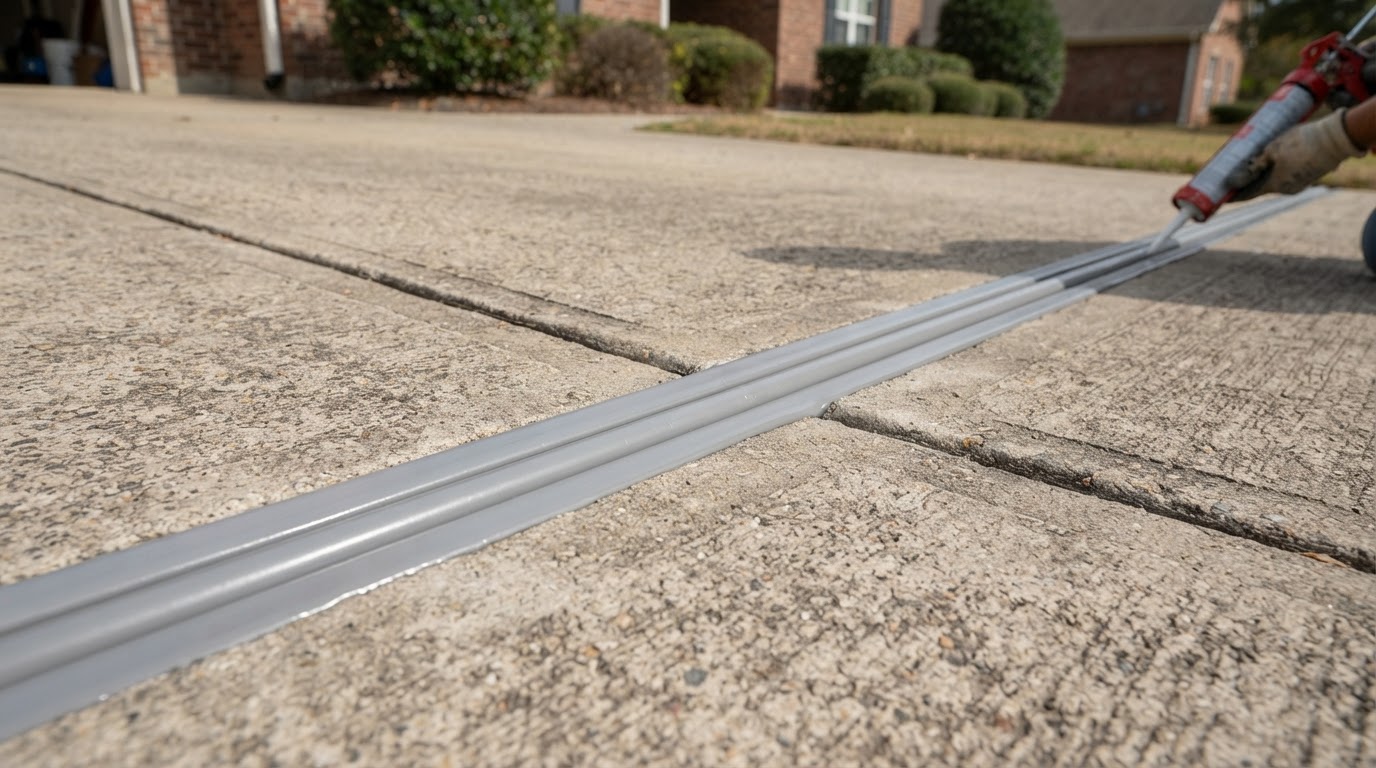
Why a closed-cell backer rod is essential for a long-lasting, flexible joint seal that handles slab movement.
Read Guide →Hot-pour rubberized crack filler, concrete expansion joint sealing.
Browse Crack Repair & Joint Sealing