2026-09-12
Hot-Pour Rubberized Crack Filler vs. Cold Liquid Fillers
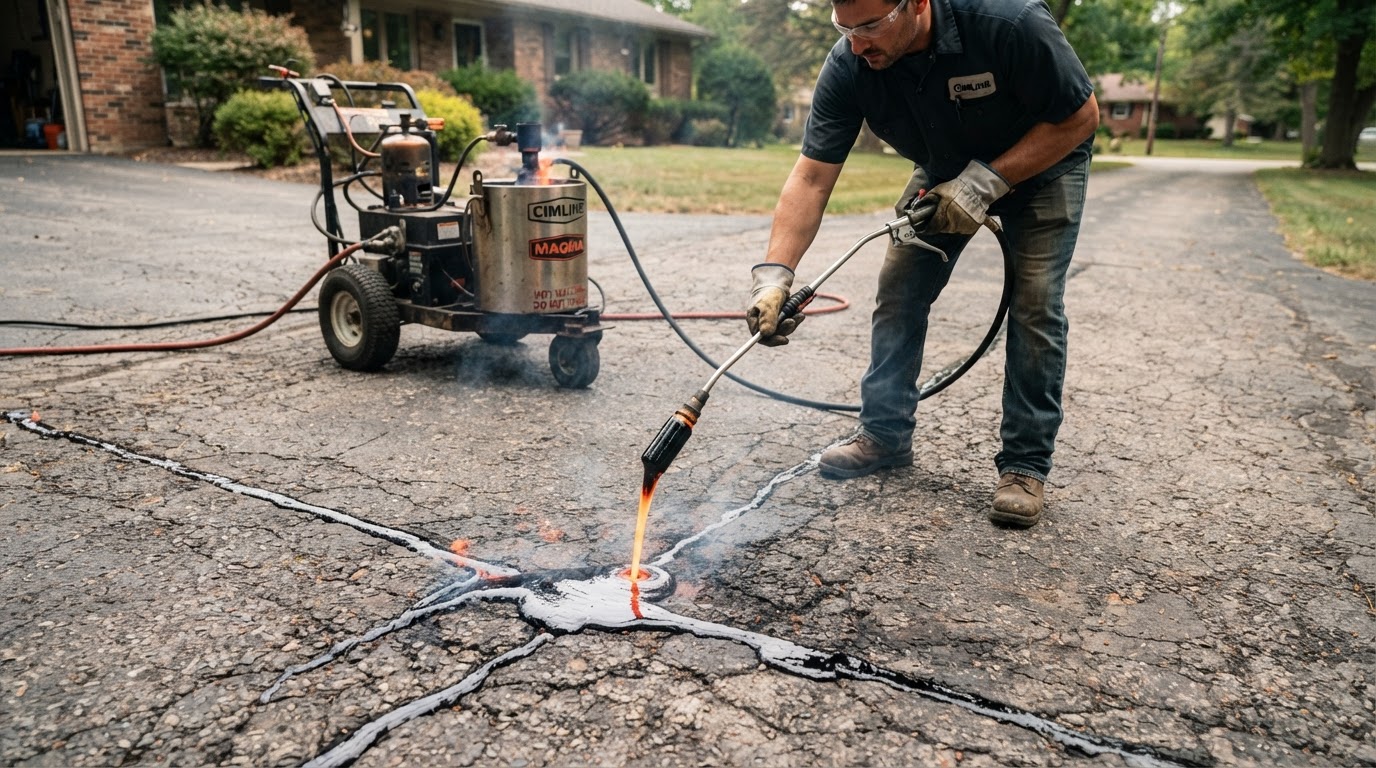
Why commercial contractors use 380°F hot-rubberized crack sealants to stop sub-base water damage.
Read Guide → Advertisement
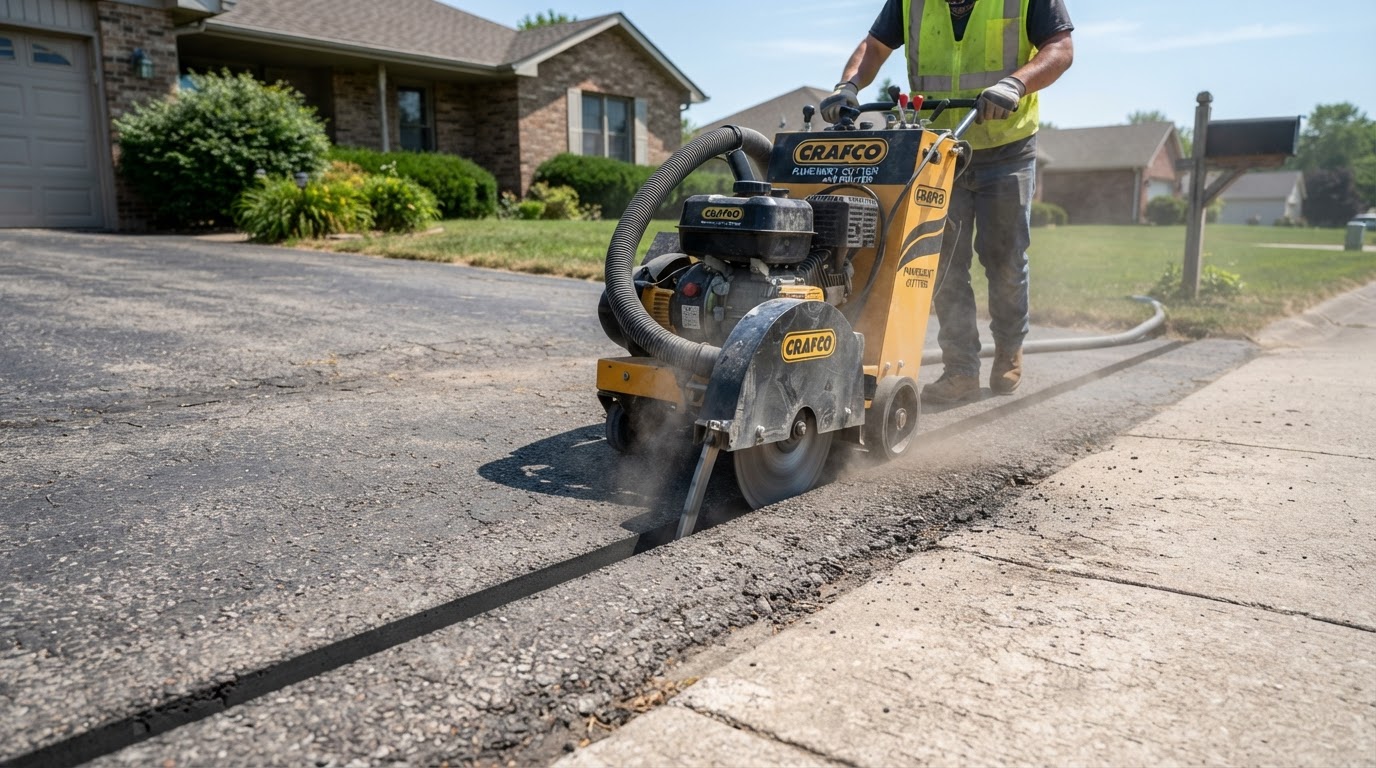
The professional method of saw-cutting cracks to a uniform width so rubberized sealant adheres and flexes properly.
Routing uses a dedicated router or crack saw to cut a uniform 1/2-inch-wide channel along random cracks, creating clean sidewalls the sealant bonds to. Unrouted cracks fail because sealant adheres to crumbled, unstable edges that break free at the first sign of movement. This single preparation step—cutting a clean, consistent channel before any sealant is applied—is the defining difference between a professional crack seal that lasts five to eight years and a quick fill that pulls out after a single winter. Understanding why routing works and how it is done helps homeowners evaluate whether a contractor is doing the job right.
Random cracks in asphalt and concrete have irregular, frayed edges. The material at the crack walls is often micro-cracked, raveled, and contaminated with dust, water, and debris. When sealant is poured directly into such a crack, it bonds to this compromised material rather than to sound pavement. As soon as the crack moves—expanding in winter cold, contracting in summer heat, or flexing under traffic—the weak, crumbled edge breaks free, taking the sealant bond with it. The sealant then pulls away from one or both walls, water re-enters the crack, and the repair has failed. This is why simply pouring sealant into a visible crack, without any preparation, rarely lasts more than a season.
Routing solves this by removing the compromised edge material entirely. A router fitted with a carbide-tipped or diamond blade cuts a straight, uniform channel—typically 1/2 inch wide and 1/2 inch deep—along the entire length of the crack. The cut exposes fresh, sound pavement on both sidewalls, free of raveling and contamination. The sealant now bonds to clean, stable material that can flex with the crack without breaking free. The uniform width also ensures a consistent sealant profile, which performs more predictably than the variable thickness of sealant in an unrouted crack.
The geometry of the routed channel matters. A width-to-depth ratio of roughly 1:1 to 2:1 (width to depth) gives the sealant the right shape to flex. If the channel is too deep and narrow, the sealant is too thick and tears when the crack widens; if it is too shallow and wide, the sealant is too thin to bridge the movement. The ideal is a channel that allows the sealant to form a band of uniform thickness that can stretch and compress like a rubber band. Many specifications call for a reservoir that is 1/2 inch wide and 1/2 inch deep for cracks up to 3/4 inch wide, with wider cracks requiring a wider cut.
After routing, a backer rod supports the sealant and prevents it from sagging into the crack. A backer rod is a closed-cell foam rope, sized 25% wider than the channel opening, that is pressed into the bottom of the routed crack. It sits below the sealant and gives it a defined depth, preventing the sealant from sinking into any voids beneath the crack and ensuring the sealant forms the correct hourglass profile. The backer rod also creates a bond-break at the bottom of the channel, so the sealant bonds only to the sidewalls and can flex freely rather than being locked at three surfaces.
Hot-pour rubberized sealant is then poured or pumped into the channel, filling it to slightly above the surface and squeegeed flush to create a tight, water-shedting band. The sealant—typically heated to 380°F in a melter—flows as a liquid, bonds to the clean sidewalls as it cools, and cures to a flexible, rubber-like plug that stretches and compresses with the seasonal movement of the crack. Because it is bonded to sound, routed pavement on both sides, it stays in place through years of freeze-thaw cycling and traffic. This is the same technology used on highways and commercial parking lots, scaled down for a residential driveway.
The conditions for routing and sealing must be right. The pavement must be dry—moisture in the routed channel prevents the hot sealant from bonding, and steam can cause bubbles and adhesion failure. The channel must be blown out with compressed air after routing to remove all dust and cuttings, and a hot-air lance may be used to dry and warm the sidewalls immediately before sealing. The work is best done in the fall, before winter freeze-thaw cycles drive water into the cracks, or in the spring after the ground has thawed. Sealing in the rain, in freezing temperatures, or over a wet crack guarantees a short-lived repair.
For homeowners, the practical takeaway is to ask any crack-sealing contractor whether they route the cracks before sealing. A contractor who simply pours sealant into visible cracks without routing is offering a temporary, cosmetic fix, not a durable repair. The cost of routing is modest compared to the cost of the water damage it prevents, and a routed and sealed crack can last five to eight years, protecting the base from saturation and extending the life of the entire driveway. Combined with a regular sealcoating schedule, professional crack routing and sealing is one of the highest-return maintenance investments a homeowner can make in an asphalt or concrete driveway.
Looking for a qualified contractor? Browse our directory of driveway resurfacing professionals specializing in crack repair & joint sealing. Compare services, request quotes, and find the right specialist for your project.
AdvertisementWhy commercial contractors use 380°F hot-rubberized crack sealants to stop sub-base water damage.
Read Guide →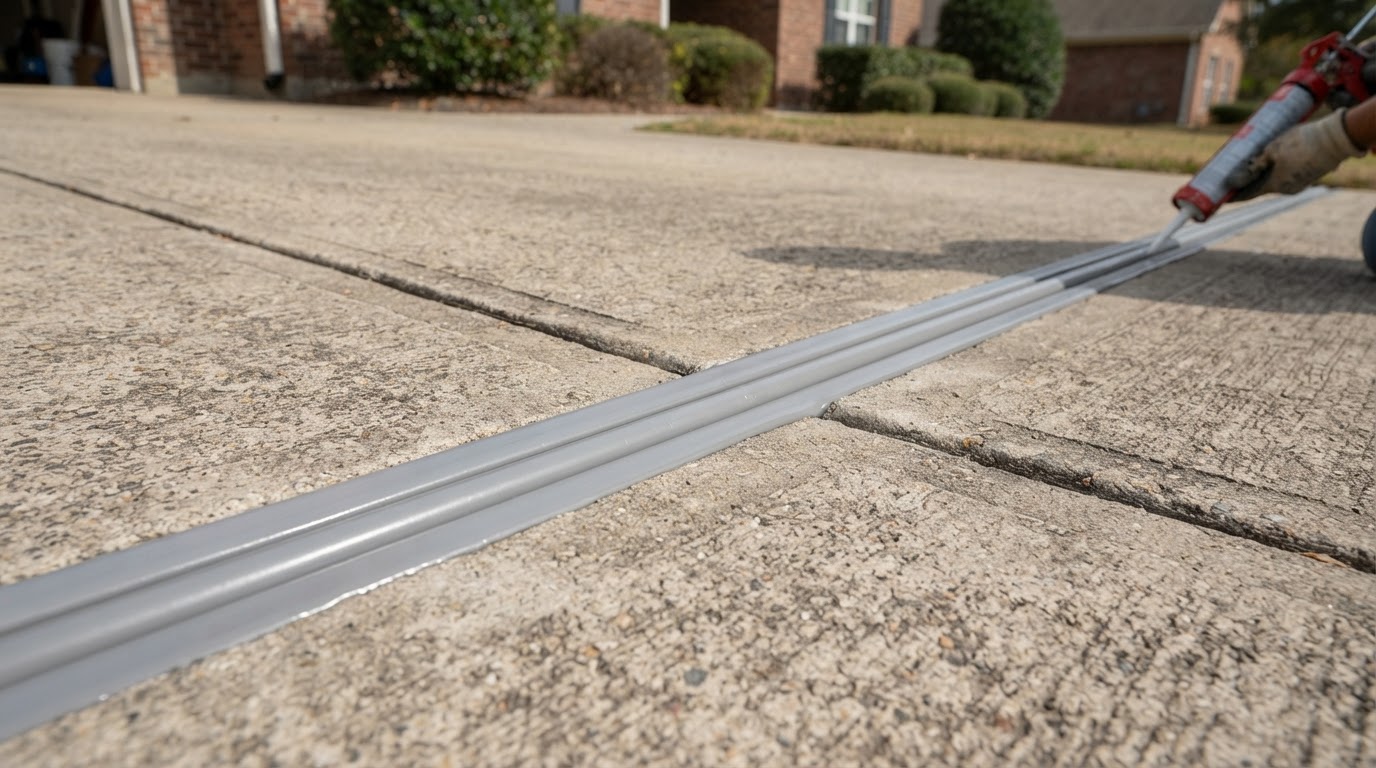
Why a closed-cell backer rod is essential for a long-lasting, flexible joint seal that handles slab movement.
Read Guide →Hot-pour rubberized crack filler, concrete expansion joint sealing.
Browse Crack Repair & Joint Sealing