
2026-09-25
Polymer-Modified Concrete Overlays: Stamped, Stained & Textured Finishes
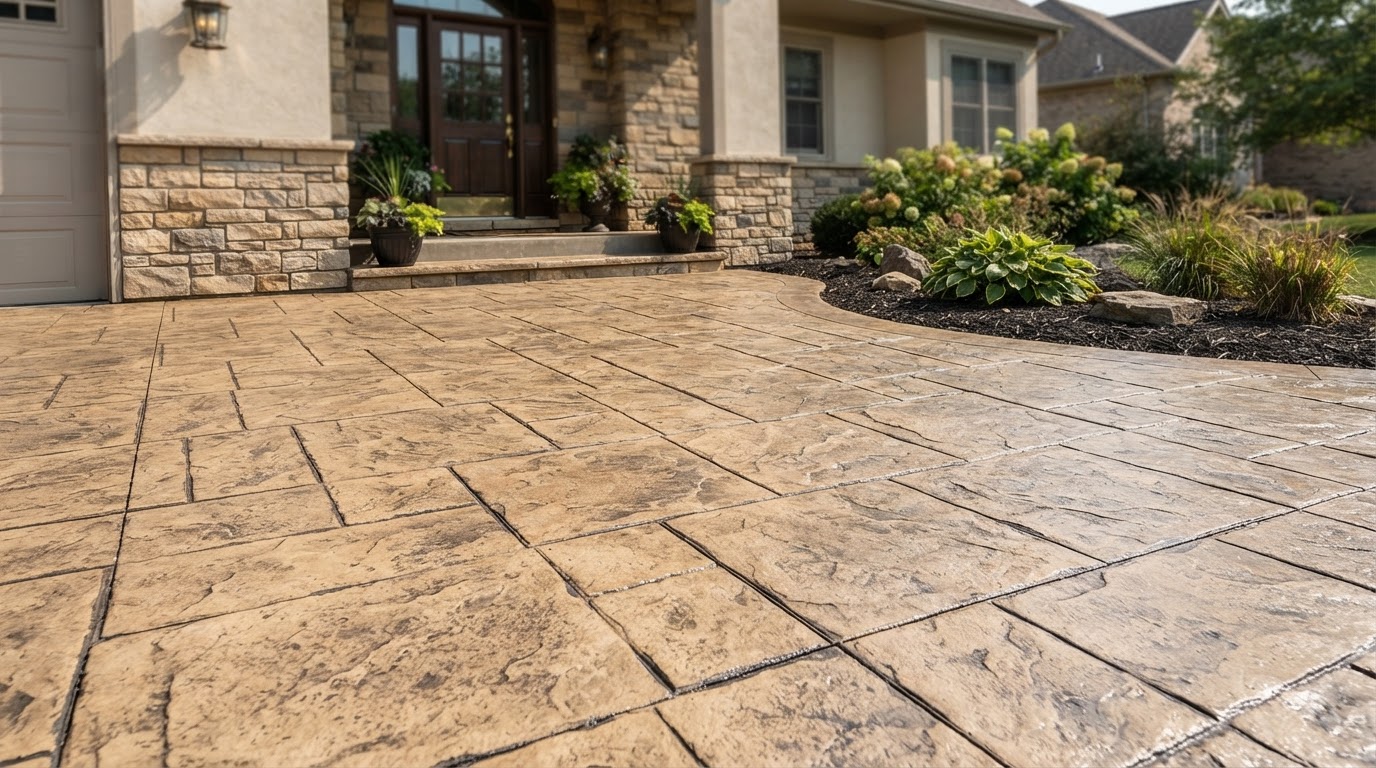
Explore how polymer concrete coatings transform spalled, cracked, or stained concrete driveways into high-end decorative surfaces.
Read Guide → Advertisement
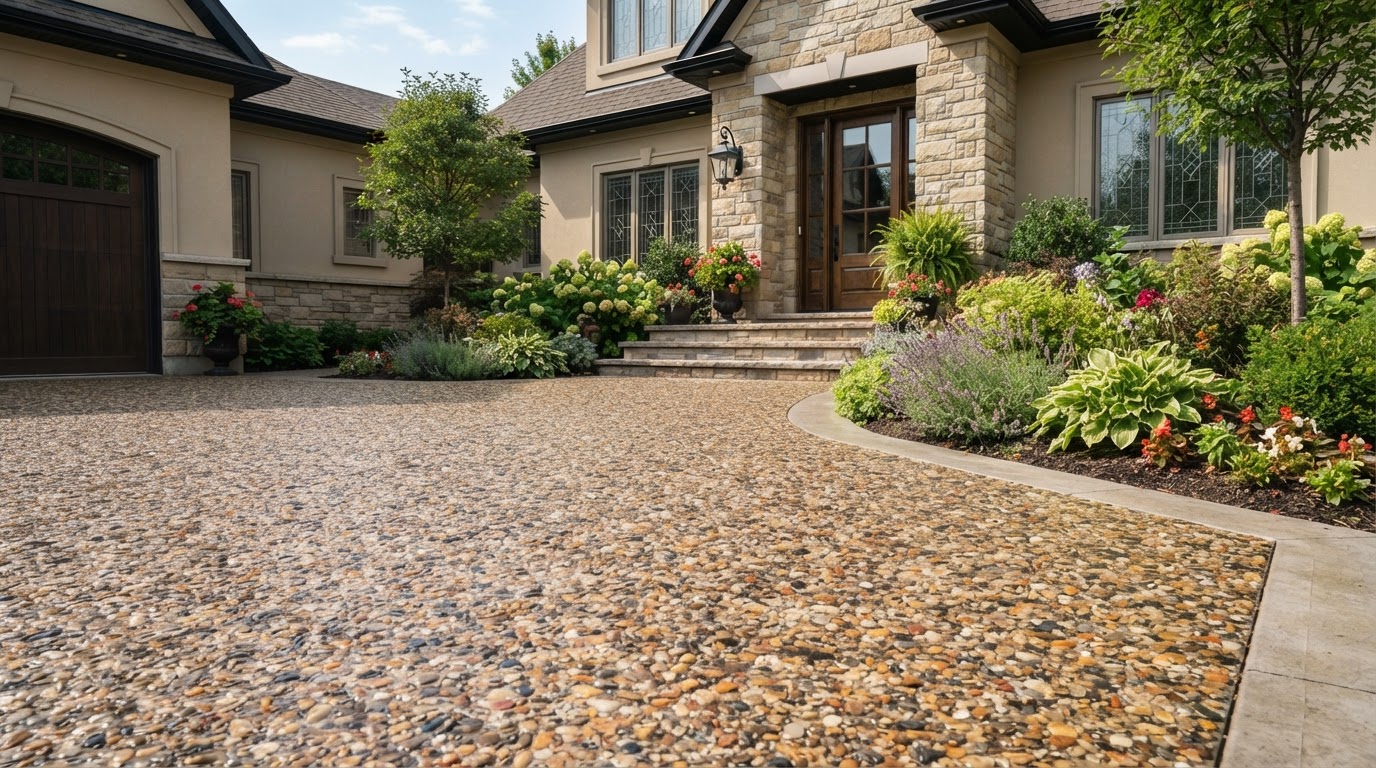
When resealing, re-exposing, or overlaying is the right choice for aging pebble-finish concrete driveways.
Exposed aggregate driveways lose their sheen and color as the surface resin wears. A penetrating acrylic or polyurethane resealer restores depth and UV protection without changing the texture. Exposed aggregate is one of the most attractive and durable concrete driveway finishes—the embedded pebbles create a natural, textured surface that is slip-resistant and visually rich. But like any concrete surface, it ages: the paste between the stones erodes, the stones themselves become dull and stained, and the once-vibrant color fades. Restoring an exposed aggregate driveway requires choosing the right approach for the specific condition of the surface.
The first step is assessing the condition. If the concrete is structurally sound, the stones are firmly embedded, and the only problem is a dull, faded, or stained appearance, a resealer is usually the right answer. If the surface paste has eroded significantly, leaving the stones proud and the surface rough and pitted, a deeper treatment is needed. If there is widespread cracking, spalling, or settlement, the structural integrity is in question and an overlay or partial reconstruction may be necessary. The restoration approach must match the severity of the deterioration.
Resealing is the simplest and most common restoration for an exposed aggregate driveway that is structurally sound but cosmetically tired. A penetrating acrylic sealer soaks into the concrete and the pores of the aggregate, restoring the depth and richness of color that UV exposure and wear have dulled. A film-forming polyurethane sealer goes further, creating a glossy or satin surface film that enhances the color dramatically and provides a hard, protective barrier against stains, de-icing salts, and abrasion. The choice between a penetrating and a film-forming sealer depends on the desired look and the level of protection needed; a film-forming sealer delivers more visual pop but requires more maintenance and can be slippery if an anti-slip additive is not used.
Before resealing, the surface must be thoroughly cleaned. Pressure washing at 3,000 to 4,000 PSI removes dirt, algae, and loose material from between the stones and from the surface of the aggregate. Oil stains are treated with a degreaser, and any organic growth is killed with a cleaning solution. The surface must be completely dry before the sealer is applied—trapped moisture beneath a film-forming sealer causes blisters and white haze. The sealer is then applied in two thin, even coats with a roller or sprayer, allowing each coat to dry before the next. A properly resealed exposed aggregate driveway looks nearly new, with deep, rich color and a protective barrier that extends the surface life.
Re-exposing is the option when the surface paste has eroded unevenly or when a homeowner wants to refresh the texture. In the original exposed aggregate process, the surface paste is washed away shortly after the concrete is poured to reveal the embedded stones. On an existing driveway, re-exposing uses a delayed-set surface retarder or a light acid wash to remove a thin layer of the surface paste, re-revealing the stones and refreshing the texture. This is a more involved process than resealing and should be done by an experienced contractor, because over-etching can damage the stones and the surrounding paste. Re-exposing is followed by a thorough cleaning and resealing.
For deeper damage—where the surface has spalled, where stones have popped out, or where cracking is widespread—a polymer-modified micro-topping can be broadcast with new aggregate and re-exposed, recreating the original pebble finish over a structurally sound base. This involves applying a thin layer of polymer-modified overlay material, pressing fresh decorative aggregate into the wet surface, allowing it to cure, and then washing or lightly etching to expose the new stones. This is the most involved restoration but can transform a badly deteriorated exposed aggregate driveway into a fresh, attractive surface without the cost of full replacement.
Color enhancement is often part of the restoration. Over time, the aggregate stones themselves can become stained or dull. A mild acid wash—using a diluted muriatic acid solution applied carefully and neutralized immediately—can remove surface staining from the stones and brighten their natural color. This must be done with great care, as acid also etches the concrete paste, and over-application can damage the surface. After any acid treatment, the surface is thoroughly rinsed, neutralized, and allowed to dry before resealing. The result is brighter, cleaner stones that, combined with a fresh sealer, restore the original visual appeal.
Maintenance after restoration determines how long the result lasts. A resealed or re-exposed driveway should be kept clean and resealed every two to three years to maintain the protective barrier and the color depth. De-icing salts should be used sparingly, as they can penetrate a worn sealer and damage the paste between the stones. Prompt cleanup of oil and fluid spills prevents staining. With proper restoration and ongoing maintenance, an exposed aggregate driveway can remain one of the most attractive and durable driveway surfaces available, delivering decades of service and a distinctive look that plain concrete or asphalt cannot match.
Looking for a qualified contractor? Browse our directory of driveway resurfacing professionals specializing in concrete resurfacing & decorative stamping. Compare services, request quotes, and find the right specialist for your project.
AdvertisementExplore how polymer concrete coatings transform spalled, cracked, or stained concrete driveways into high-end decorative surfaces.
Read Guide →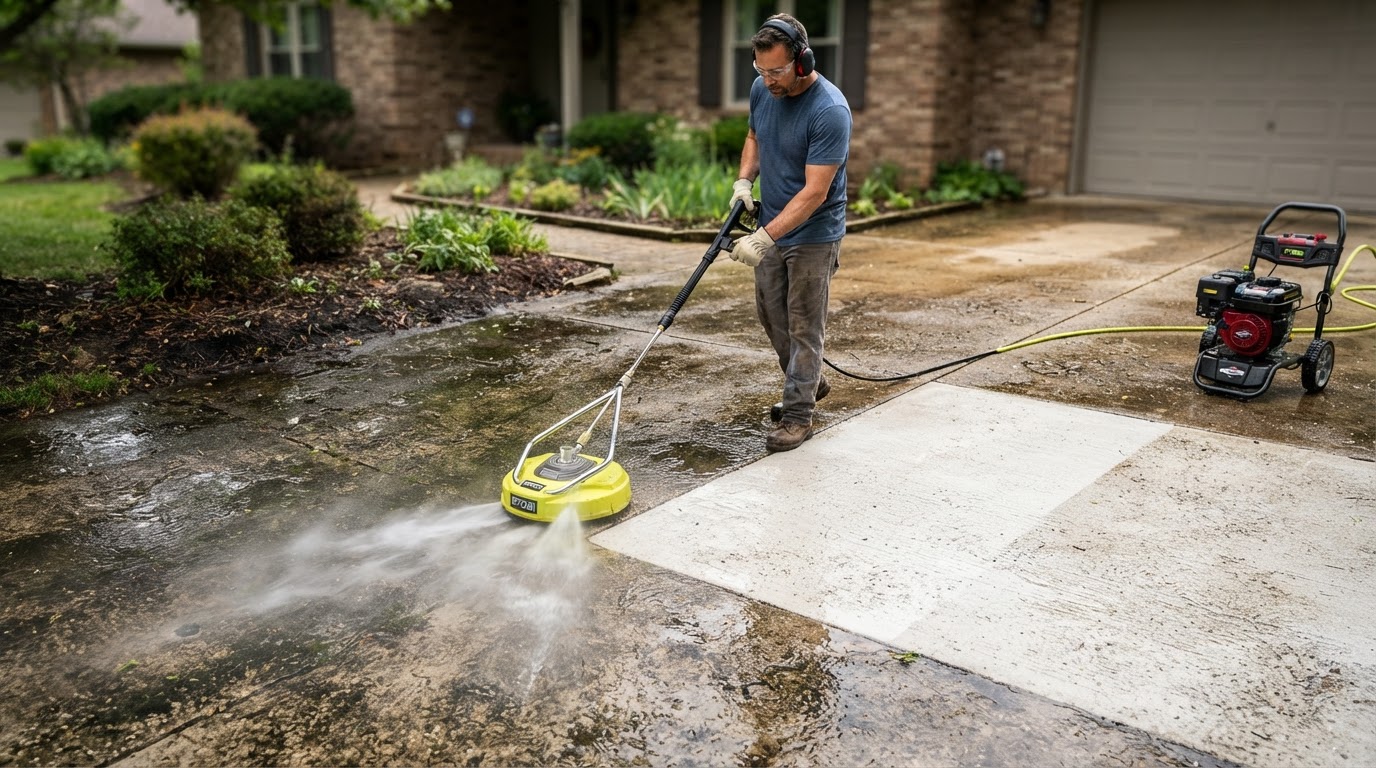
How proper surface cleaning removes contaminants so overlays, sealcoats, and coatings bond correctly and last longer.
Read Guide →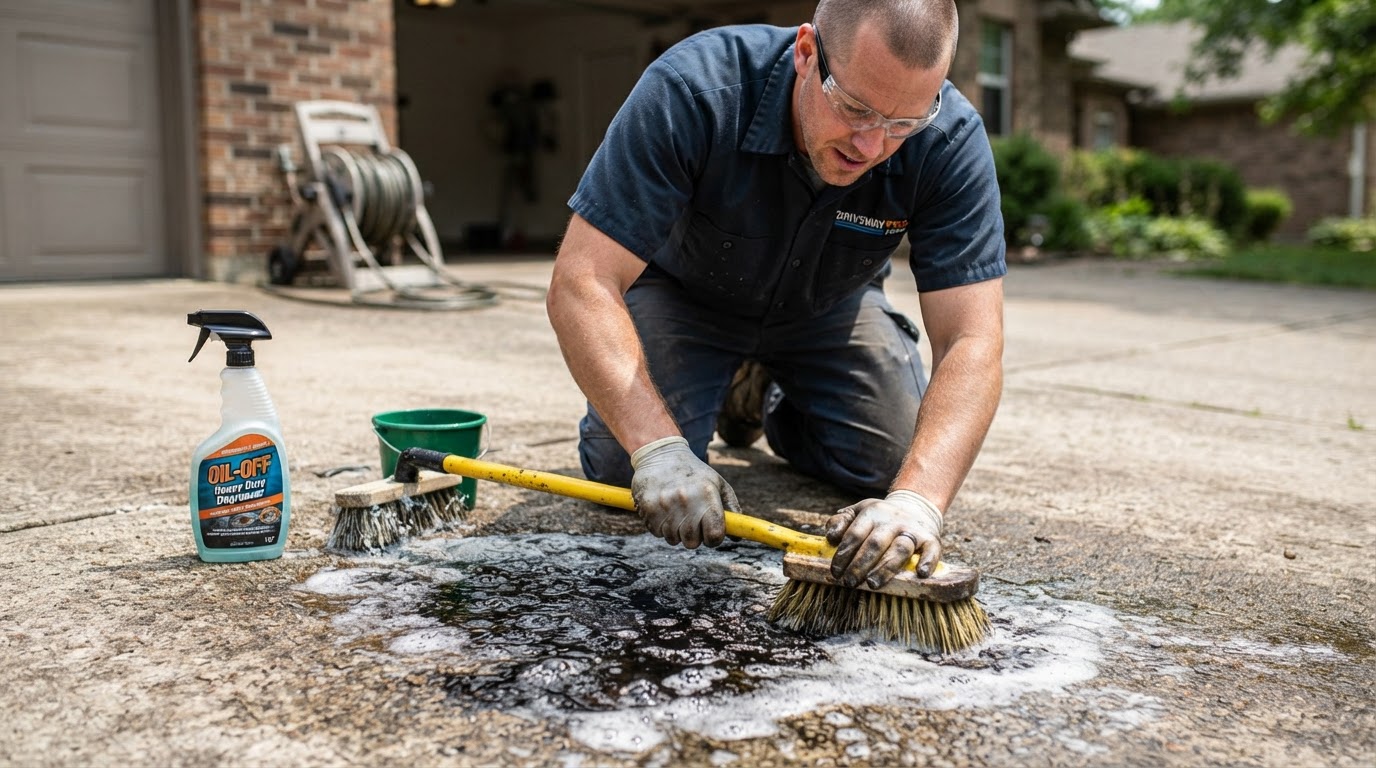
Safe degreasers, poultice methods, and why acid washing does more harm than good on residential concrete.
Read Guide →Polymer-modified concrete overlays, decorative stamping, and textured finishes.
Browse Concrete Resurfacing & Decorative Stamping