2026-09-25
Polymer-Modified Concrete Overlays: Stamped, Stained & Textured Finishes
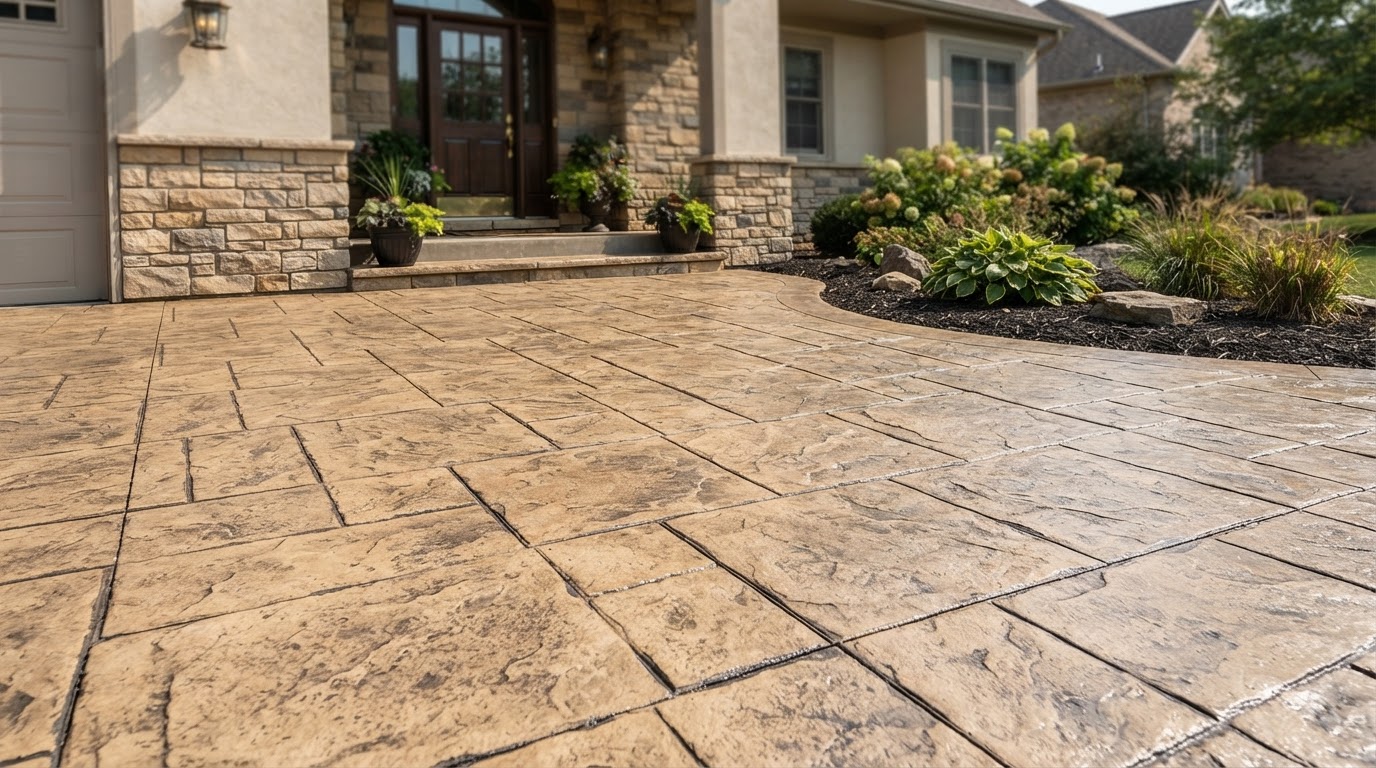
Explore how polymer concrete coatings transform spalled, cracked, or stained concrete driveways into high-end decorative surfaces.
Read Guide → Advertisement
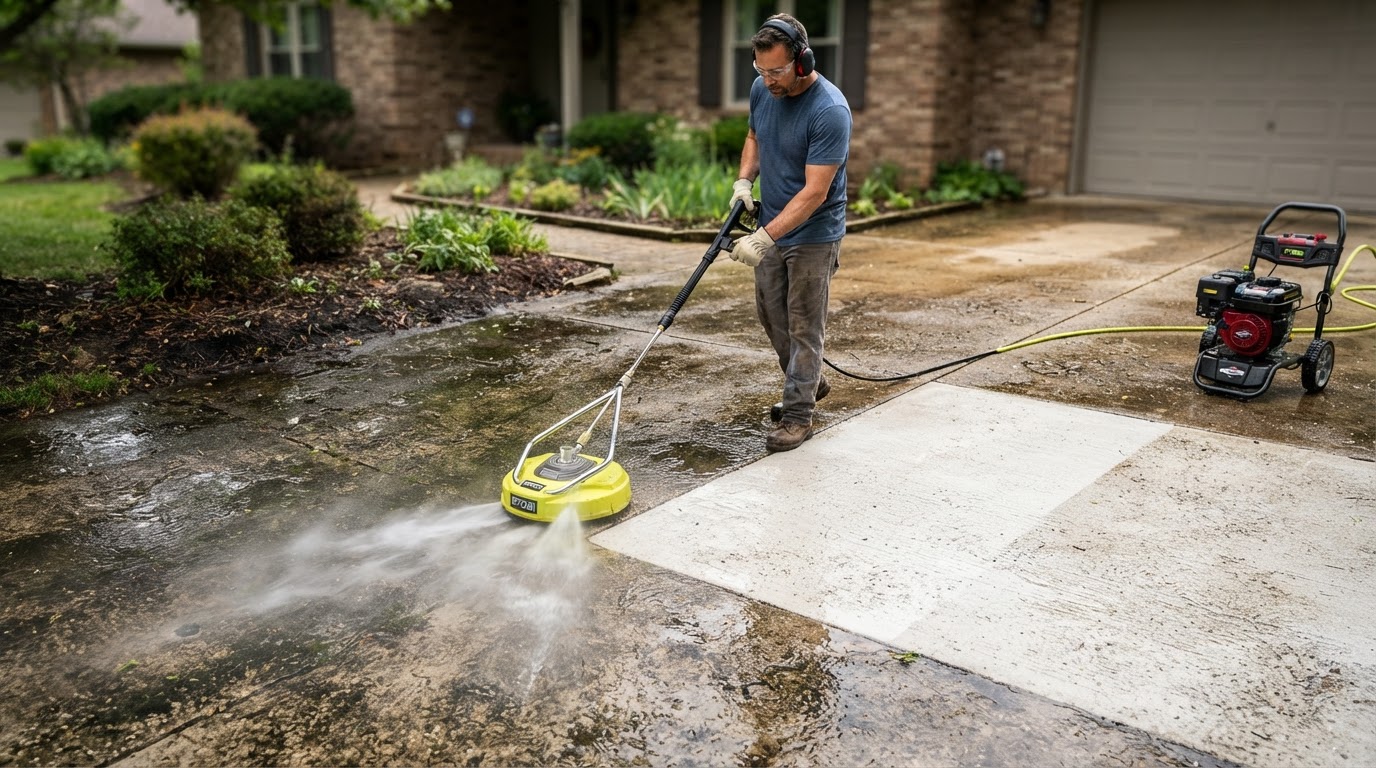
How proper surface cleaning removes contaminants so overlays, sealcoats, and coatings bond correctly and last longer.
Before any overlay, sealcoat, or coating can adhere properly, the existing driveway must be free of dirt, oil, algae, and loose material. Pressure washing at the correct PSI strips contaminants that would otherwise cause premature delamination. This single preparation step is the foundation of every successful resurfacing project, and skipping it or doing it poorly is the most common reason that overlays peel, sealcoats fail, and coatings bubble within the first year. Surface preparation is not a formality—it is the difference between a finish that lasts a decade and one that fails in a season.
The reason preparation matters so much is that every resurfacing product bonds to the surface mechanically and chemically. An overlay needs clean, open pores in the concrete or asphalt to grip; a sealcoat needs a dry, contaminant-free surface to form its protective film; a polyaspartic or epoxy coating needs bare, profiled concrete for adhesion. Any layer of dirt, oil, algae, old sealer, or laitance (the weak, powdery layer on top of cured concrete) sits between the new material and the substrate, preventing that bond. The result is a surface that looks fine initially but delaminates under traffic, thermal stress, or freeze-thaw cycling.
Pressure washing removes the bulk of the contamination. For concrete, a pressure of 3,000 to 4,000 PSI with a rotary surface cleaner is typically used to strip dirt, algae, and loose material without etching the surface. For asphalt, a lower pressure—around 2,500 to 3,000 PSI—is used to avoid dislodging aggregate or damaging the binder. The goal is a uniformly clean surface with no visible dirt streaks, no algae growth in the pores, and no loose material that can be scraped up with a putty knife. The surface should pass the tape test: press a piece of duct tape onto the surface and pull it off; if it pulls up dirt or material, the surface is not clean enough.
Contractors typically follow pressure washing with a degreaser treatment on oil-stained areas. Petroleum products dissolve asphalt binder and penetrate concrete pores, and they will prevent any overlay or coating from bonding in the contaminated area. A commercial degreaser, scrubbed into the stain and then pressure-washed, lifts the oil; for deep or old stains, a poultice of absorbent material and solvent may be needed to draw the oil out of the concrete. The area is then primed with a bonding agent specifically designed for oil-contaminated surfaces before the overlay or coating is applied.
Mechanical profiling goes beyond what pressure washing alone can achieve. For coatings that require a specific surface profile—measured on the International Concrete Repair Institute (ICRI) scale from CSP 1 (nearly smooth) to CSP 9 (very rough)—the surface may need to be ground with diamond abrasives or shot-blasted with steel shot. This opens the concrete pores, removes any existing sealer or curing compound, and creates the texture the coating needs to bond. The required profile depends on the coating system; a thin polyaspartic needs a finer profile, while a thick polymer overlay can bond to a rougher surface.
Existing sealers and coatings must be removed, not just cleaned over. A concrete driveway that was previously sealed has a film on the surface that no overlay or coating can penetrate. If that film is not ground or chemically stripped off, the new material bonds to the old sealer rather than the concrete, and the entire layer can peel off in sheets. A simple test—pouring water on the surface—reveals whether a sealer is present: if the water beads up and sits on the surface, a sealer is there and must be removed before resurfacing.
Crack and joint preparation is part of the cleaning process. Every crack that will be filled must be routed to clean, sound sidewalls, and every expansion joint must be cleaned of old, failed sealant and debris. Pressure washing alone does not prepare a crack for sealant—the crack must be routed with a blade, blown out with compressed air, and dried. Applying sealant over a crack full of dust and water guarantees the sealant will not bond and will pull out within a season. This is tedious, detail-oriented work, but it is what makes the difference between a repair that lasts and one that does not.
The final step before any material is applied is a thorough drying period. Even a perfectly cleaned surface must be completely dry before an overlay, sealcoat, or coating is installed. Trapped moisture beneath a coating causes blisters as it tries to escape; moisture in the pores prevents an overlay from bonding. Depending on weather, this drying period can range from a few hours on a hot, dry, breezy day to 48 hours after rain or in humid conditions. A contractor who applies a coating to a damp surface is guaranteeing a failure. When the surface is clean, profiled, crack-prepared, and bone-dry, the resurfacing material can bond the way it was designed to, and the result will deliver its full expected lifespan.
Looking for a qualified contractor? Browse our directory of driveway resurfacing professionals specializing in concrete resurfacing & decorative stamping. Compare services, request quotes, and find the right specialist for your project.
AdvertisementExplore how polymer concrete coatings transform spalled, cracked, or stained concrete driveways into high-end decorative surfaces.
Read Guide →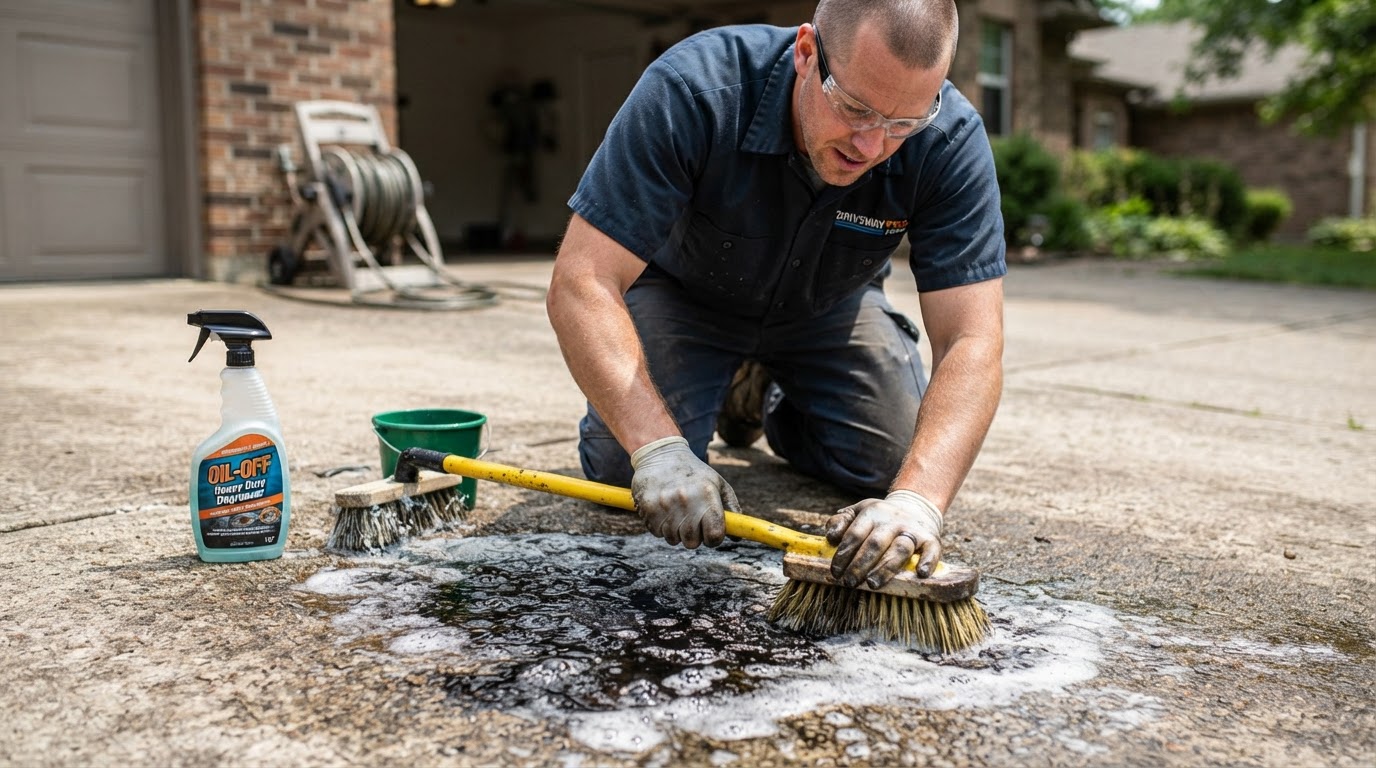
Safe degreasers, poultice methods, and why acid washing does more harm than good on residential concrete.
Read Guide →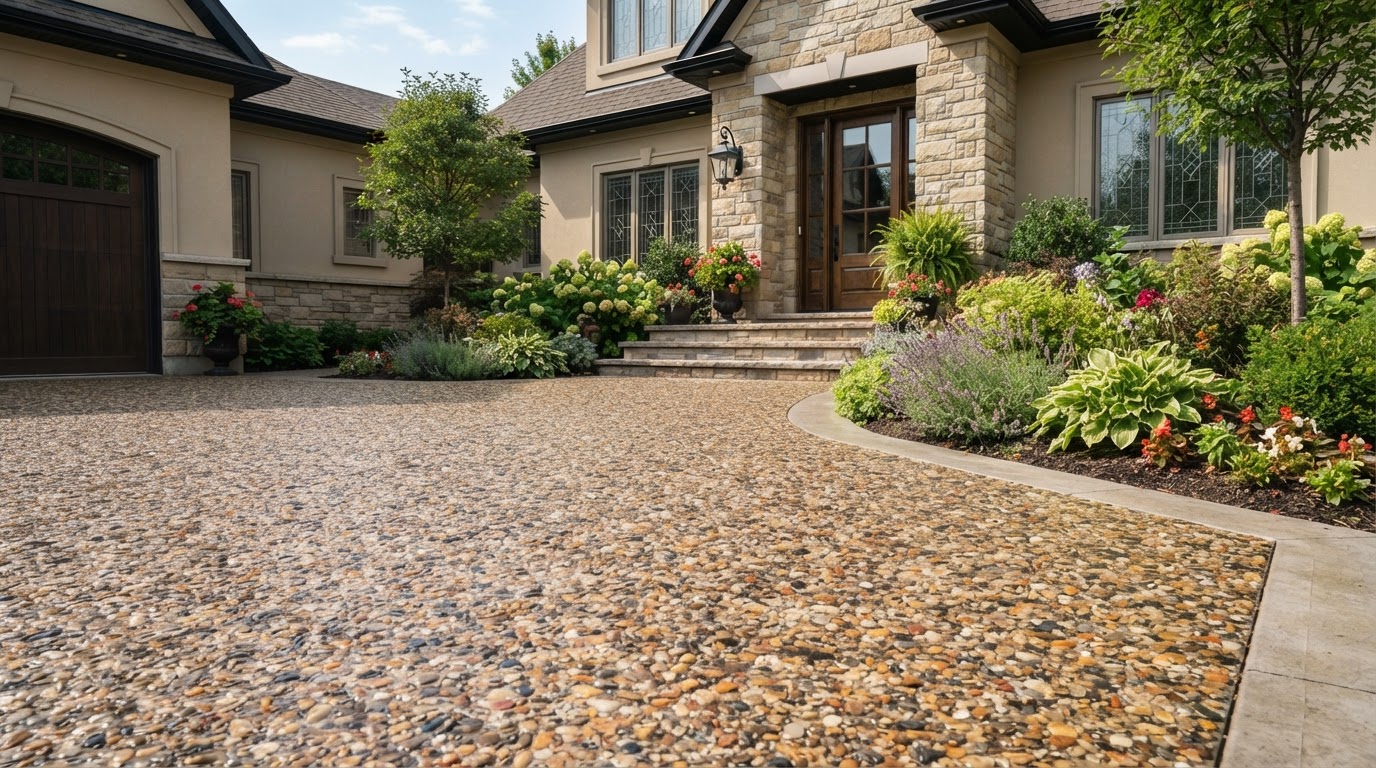
When resealing, re-exposing, or overlaying is the right choice for aging pebble-finish concrete driveways.
Read Guide →Polymer-modified concrete overlays, decorative stamping, and textured finishes.
Browse Concrete Resurfacing & Decorative Stamping