
2026-09-25
Polymer-Modified Concrete Overlays: Stamped, Stained & Textured Finishes
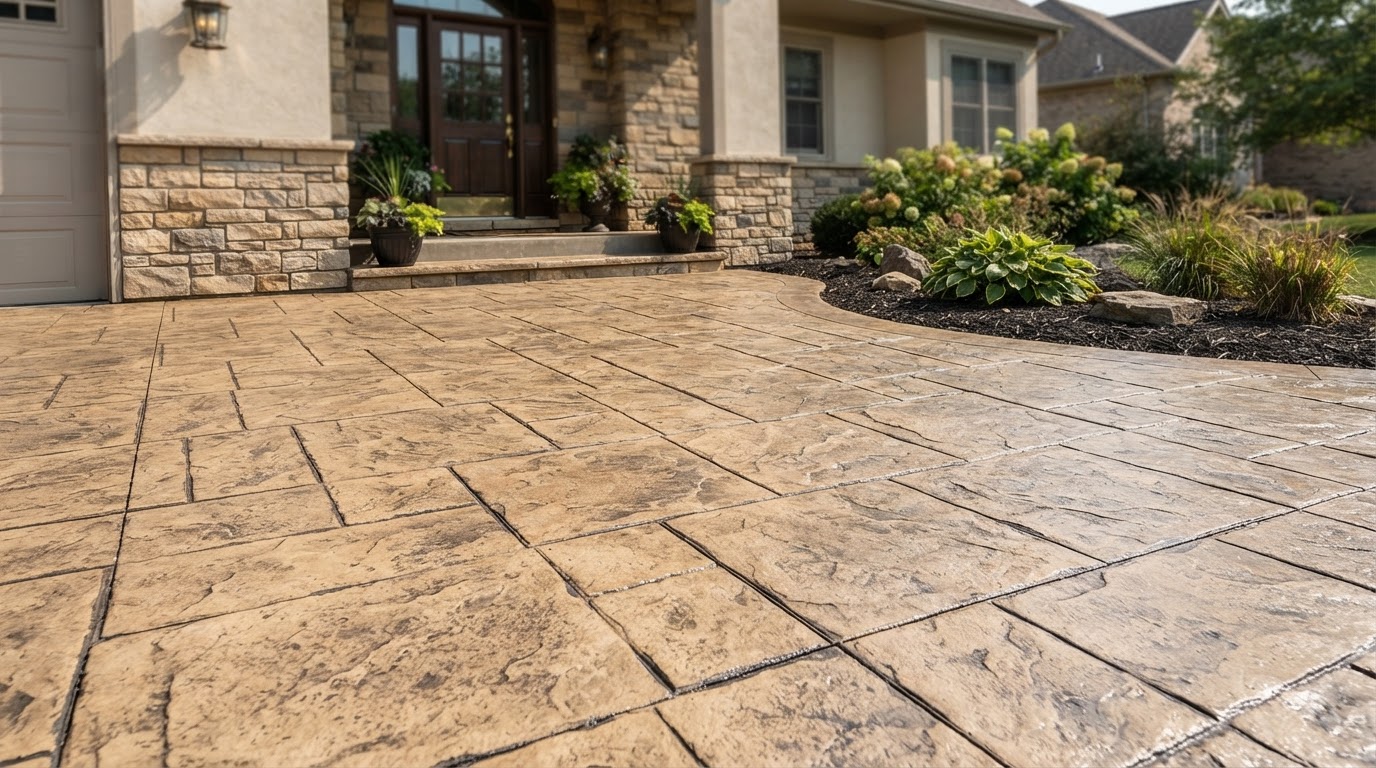
Explore how polymer concrete coatings transform spalled, cracked, or stained concrete driveways into high-end decorative surfaces.
Read Guide → Advertisement
Safe degreasers, poultice methods, and why acid washing does more harm than good on residential concrete.
Fresh oil stains are best absorbed with kitty litter or a commercial absorbent before they soak in. A degreaser followed by a poultice of baking soda and acetone lifts deep-set stains without etching the concrete. Oil, transmission fluid, and power-steering fluid are the most common driveway stains, and they are more than a cosmetic problem—petroleum products can penetrate concrete pores and, on asphalt, actually dissolve the binder, weakening the surface. Removing these stains promptly and correctly protects both the appearance and the integrity of the driveway.
The first rule of oil stain removal is to act quickly. A fresh spill sits on the surface and can be absorbed before it penetrates. Cover the spill with an absorbent material—kitty litter, diatomaceous earth, or a commercial oil absorbent—and let it sit for several hours or overnight to pull the liquid out of the concrete. Sweep up the saturated absorbent and dispose of it properly. This single step removes the majority of a fresh spill and prevents it from soaking deep into the pores where it becomes far harder to extract.
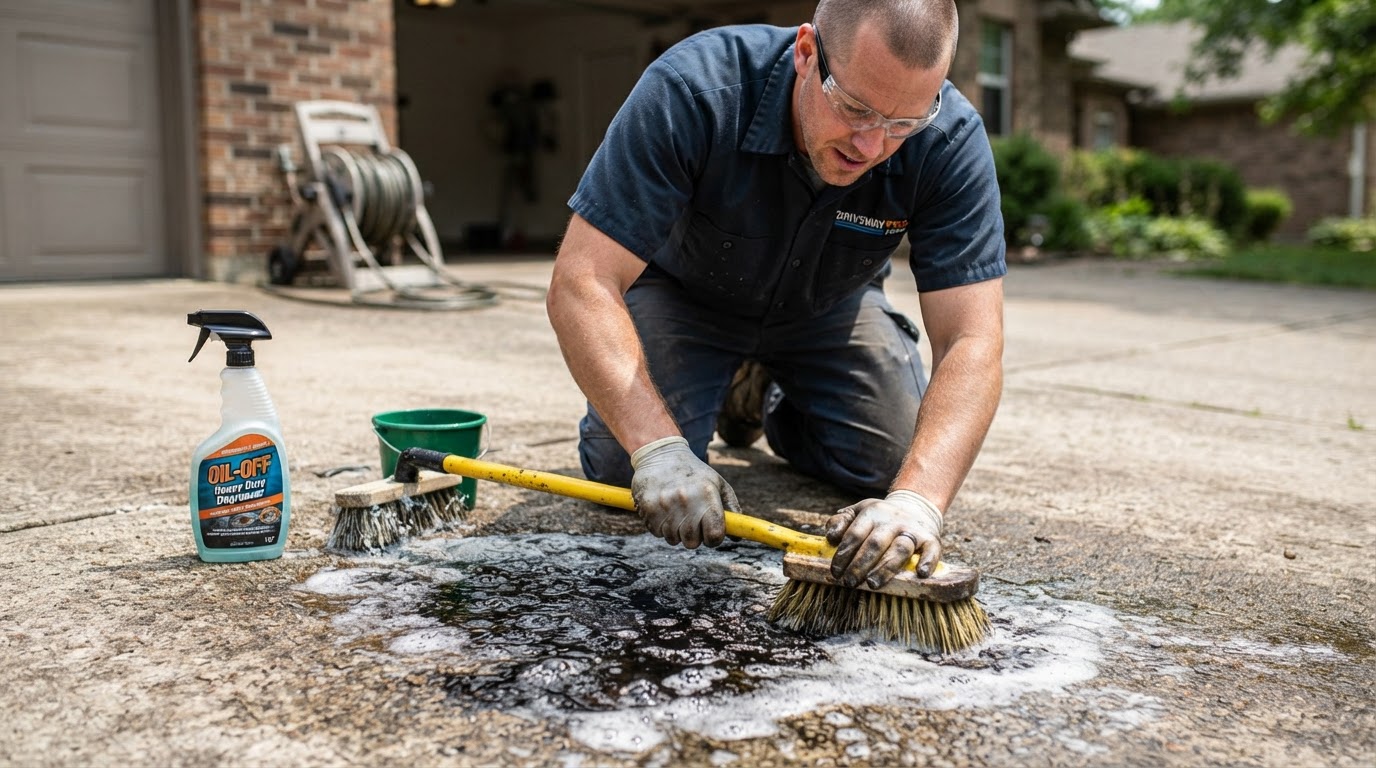
For stains that have already penetrated, a degreaser is the next step. A commercial concrete degreaser, or a concentrated dish soap designed to cut grease, is applied to the stain, scrubbed in with a stiff nylon brush (never a wire brush, which can damage the surface), and allowed to dwell for 10 to 15 minutes to break down the oil. The area is then rinsed with hot water, which helps emulsify and lift the oil. Stubborn stains may require two or three repetitions. The degreaser works by breaking the oil into smaller particles that can be rinsed away, rather than driving it deeper into the concrete.
The poultice method is the most effective technique for deep, set-in stains that have resisted surface cleaning. A poultice is a paste made from an absorbent powder—baking soda, diatomaceous earth, or talc—and a solvent such as acetone or mineral spirits. The paste is spread over the stain to a thickness of about a quarter inch, covered with plastic wrap to slow evaporation, and left to dry for 24 to 48 hours. As the poultice dries, it draws the dissolved oil out of the concrete pores and into the absorbent powder. The dried paste is then scraped away, taking the oil with it. Deep stains may require two or three poultice applications.
Avoid muriatic acid on decorative or sealed concrete—it dissolves the paste and exposes aggregate, creating a rough surface that traps future stains. Acid washing was once a common recommendation for stubborn concrete stains, but it is a blunt instrument that etches the surface chemically, removing a thin layer of the cement paste along with the stain. On a plain, unsealed concrete driveway, this may be acceptable, but on a stamped, stained, or sealed driveway, acid washing destroys the finish, exposes the aggregate, and creates a rough, porous surface that is more susceptible to future staining and freeze-thaw damage. Acid does not actually dissolve oil—it etches the concrete around it.
Pressure washing can be effective for surface-level stains but must be used with care. A pressure of 3,000 PSI with a hot-water unit can lift oil that has not penetrated deeply, especially when combined with a degreaser pretreatment. However, excessive pressure or holding the wand too close can etch the concrete, particularly on older or weaker surfaces. A rotary surface cleaner attachment distributes the pressure more evenly and is less likely to leave streaks or etch marks than a wand. For deep stains, pressure washing alone is rarely sufficient; it should be combined with a degreaser or poultice treatment.
Preventing future stains is easier than removing them. A penetrating or film-forming concrete sealer creates a barrier that slows oil penetration, giving the homeowner time to absorb and clean a spill before it soaks in. A sealed concrete driveway can be wiped clean of a fresh oil spill with a rag, whereas an unsealed driveway absorbs the oil immediately. Resealing every two to three years maintains this protective barrier. For homeowners with older vehicles that leak, placing a drip pan or absorbent mat under the parking spot catches fluids before they reach the concrete.
On asphalt driveways, the stakes are higher because petroleum products dissolve the asphalt binder. A fresh oil spill on asphalt should be absorbed immediately, and the area treated with a degreaser and rinsed. If the asphalt has softened or become sticky from a large or long-standing spill, the damaged section may need to be cut out and patched, because the binder has been compromised and the surface will ravel and fail. This is why prompt cleanup and a regular sealcoat—which provides a sacrificial barrier against oil—are especially important on asphalt. Whether the driveway is concrete or asphalt, the combination of prompt absorption, degreaser treatment, poultice extraction for deep stains, and a protective sealer keeps the surface clean and sound without resorting to harsh acids that do more harm than good.
Looking for a qualified contractor? Browse our directory of driveway resurfacing professionals specializing in concrete resurfacing & decorative stamping. Compare services, request quotes, and find the right specialist for your project.
AdvertisementExplore how polymer concrete coatings transform spalled, cracked, or stained concrete driveways into high-end decorative surfaces.
Read Guide →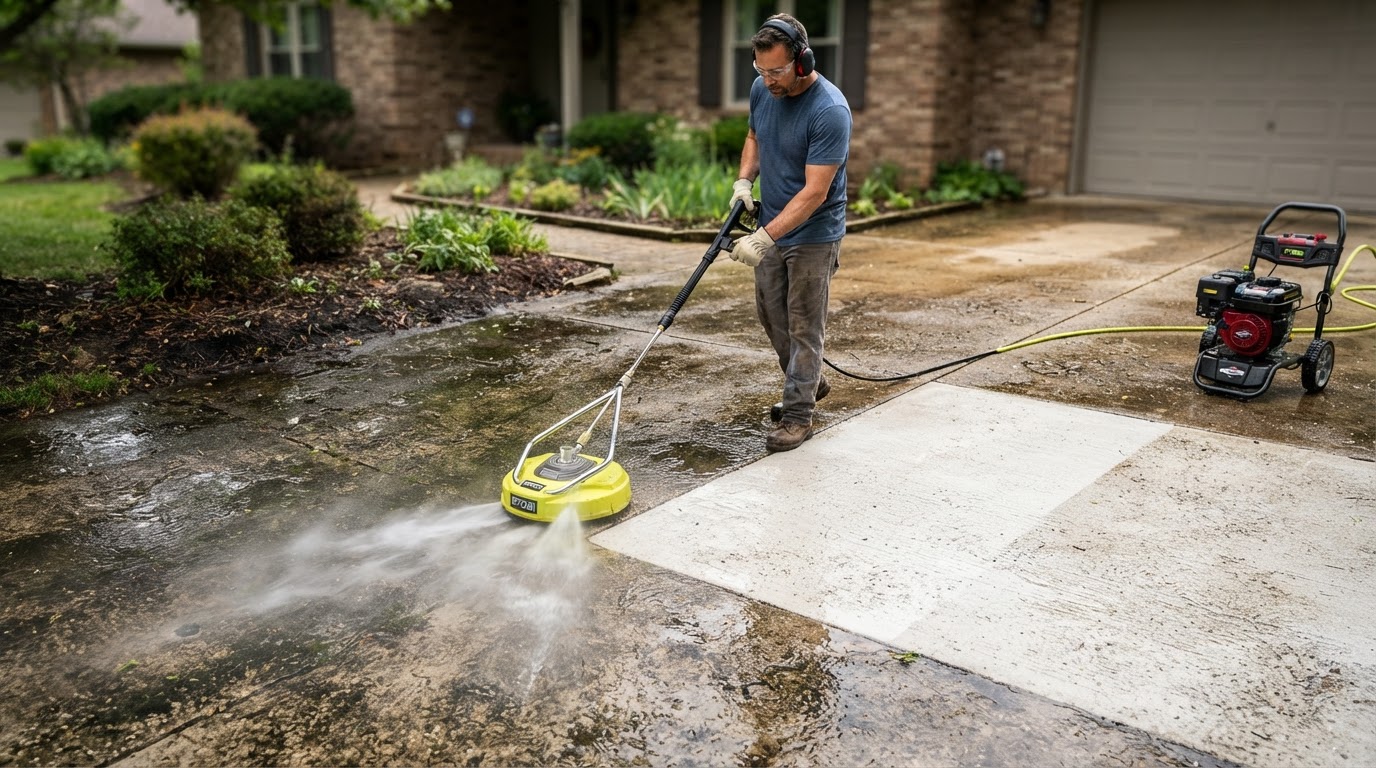
How proper surface cleaning removes contaminants so overlays, sealcoats, and coatings bond correctly and last longer.
Read Guide →
When resealing, re-exposing, or overlaying is the right choice for aging pebble-finish concrete driveways.
Read Guide →Polymer-modified concrete overlays, decorative stamping, and textured finishes.
Browse Concrete Resurfacing & Decorative Stamping