2026-10-01
Driveway Resurfacing vs. Replacement: Complete Cost & Lifespan Guide
Compare asphalt overlays and concrete resurfacing against full tear-out replacement to determine the best return on investment for your driveway.
Read Guide → Advertisement
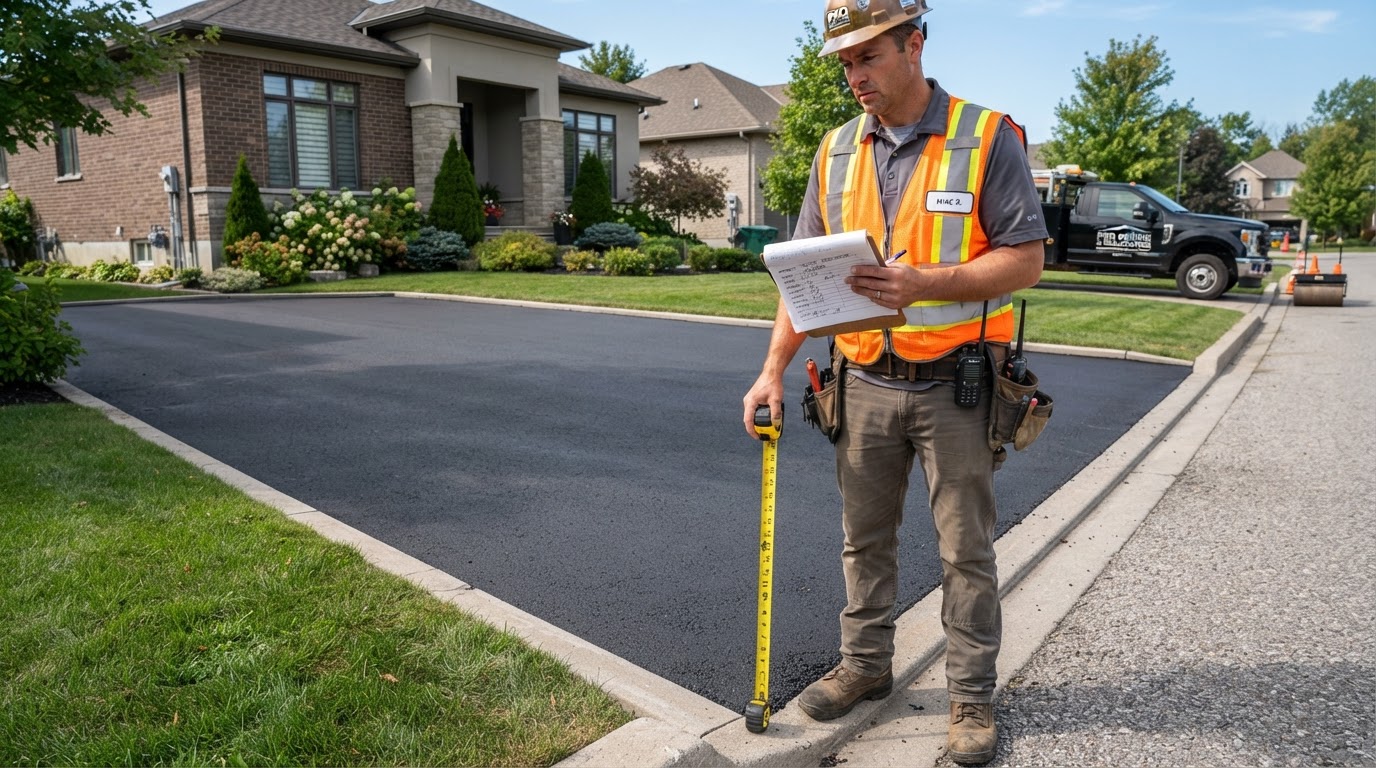
Verify insurance, equipment specs, asphalt mix temperature, and warranty coverage when selecting a local paving specialist.
Always request proof of general liability insurance, worker safety coverage, and written specs detailing asphalt depth after compaction. Hiring a driveway resurfacing contractor is a significant investment, and the difference between a durable, professional job and a premature failure often comes down to the questions asked before the contract is signed. The following ten questions help homeowners separate qualified, reputable contractors from those who cut corners, and they should be asked of every bidder before a decision is made.
First, ask for proof of insurance. A legitimate contractor carries general liability insurance and workers' compensation coverage, and should provide a certificate of insurance directly from their carrier—named to the homeowner if requested. If a worker is injured on an uninsured job, the homeowner can be held liable. If the contractor damages adjacent property, liability insurance covers the repair. Any contractor who cannot or will not provide current insurance certificates is a risk not worth taking, regardless of how low their price is.
Second, ask whether the contractor is licensed in the municipality or state where the work will be performed. Licensing requirements vary by region, but a valid license indicates that the contractor has met minimum competency and financial responsibility standards. Verify the license number with the issuing authority, and check for any disciplinary history or complaints. A contractor operating without a required license may also be skipping other regulatory and safety obligations.
Third, ask about the asphalt mix and its temperature at delivery. Hot-mix asphalt must arrive at the site between 275°F and 325°F to be properly workable and to compact to the correct density. If the mix is too cool, it cannot be compacted adequately, and the resulting pavement will be porous, weak, and prone to raveling. Ask the contractor what mix design they use, what the compacted thickness will be (typically 2 inches for an overlay, 3 to 4 inches for new construction), and how they monitor temperature at delivery.
Fourth, ask about the base preparation. An overlay or new surface is only as durable as the base beneath it. For an overlay, the existing surface should be milled or cleaned and tack-coated to ensure bonding. For new construction, the aggregate base must be properly graded, compacted to the specified density, and free of organic material. A contractor who dismisses base preparation or cannot describe their process is likely to deliver a surface that fails prematurely as the base shifts or settles.
Fifth, ask about the crew and equipment. A professional asphalt job requires a skilled crew and the right equipment: a paver for uniform placement, a vibratory roller and possibly a static roller for compaction, and a tack-coat distributor. Hand-raking and hand-tamping a driveway without proper equipment produces an uneven, poorly compacted surface. Ask how many crew members will be on site, what equipment they will bring, and whether they subcontract any part of the work.
Sixth, ask for references and examples of completed work. A reputable contractor should be able to provide addresses of recent projects the homeowner can drive by and inspect, as well as contact information for past clients. Look at the quality of the surface—uniform texture, clean edges, proper slope, no raveling or segregation. Speaking with past clients about their experience, the contractor's communication, and how the driveway has held up over time is invaluable.
Seventh, ask about the warranty. A written warranty that covers materials and workmanship for a defined period—typically one to five years for residential work—is a sign that the contractor stands behind their work. Understand exactly what is covered (e.g., cracking, settlement, raveling) and what is excluded (e.g., damage from heavy vehicles, de-icing chemicals, or base failure caused by pre-existing conditions the contractor identified and disclosed). A warranty that is vague or only verbal is not a warranty.
Eighth, ask about the project timeline and what happens if weather delays the work. Asphalt and concrete work are weather-dependent, and a responsible contractor will reschedule rather than install in marginal conditions. Ask when the work will start, how long it will take, what the curing time is before the driveway can be used, and what the contractor's policy is for weather delays. A contractor who promises a fixed date regardless of conditions may be willing to compromise quality to meet it.
Ninth, ask for a detailed, written quote that itemizes the scope of work, materials, quantities, preparation steps, and total price. A quote that is simply a single number with no breakdown makes it impossible to compare bids fairly or to verify that the contractor is including the necessary preparation. The quote should specify the asphalt thickness, the base work, the tack coat, the edges, any drainage work, and the cleanup. Vague quotes are a red flag, and a significantly lower price usually reflects a missing scope item.
Tenth, ask how the contractor handles drainage and existing cracks. A contractor who plans to overlay without addressing drainage problems or without routing and sealing existing cracks is setting the project up for reflective cracking and premature failure. The right answer is that the contractor evaluates drainage, recommends corrections if needed, and addresses existing cracks before applying the new surface. The contractor's response to this question reveals whether they are thinking about the long-term performance of the driveway or simply about completing the pour and collecting payment.
Looking for a qualified contractor? Browse our directory of driveway resurfacing professionals specializing in asphalt resurfacing & overlays. Compare services, request quotes, and find the right specialist for your project.
AdvertisementCompare asphalt overlays and concrete resurfacing against full tear-out replacement to determine the best return on investment for your driveway.
Read Guide →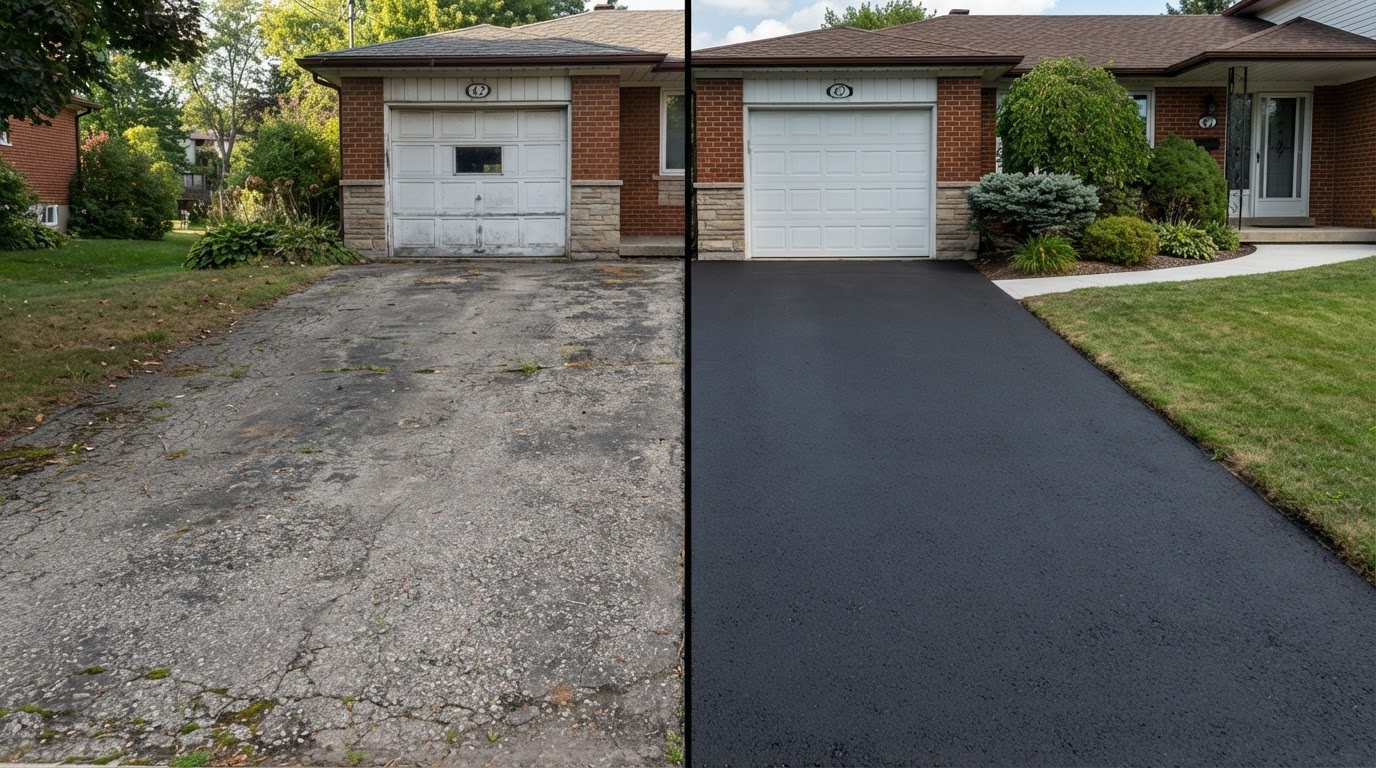
The visual and structural difference between a faded, oxidized driveway and a properly compacted hot-mix overlay.
Read Guide →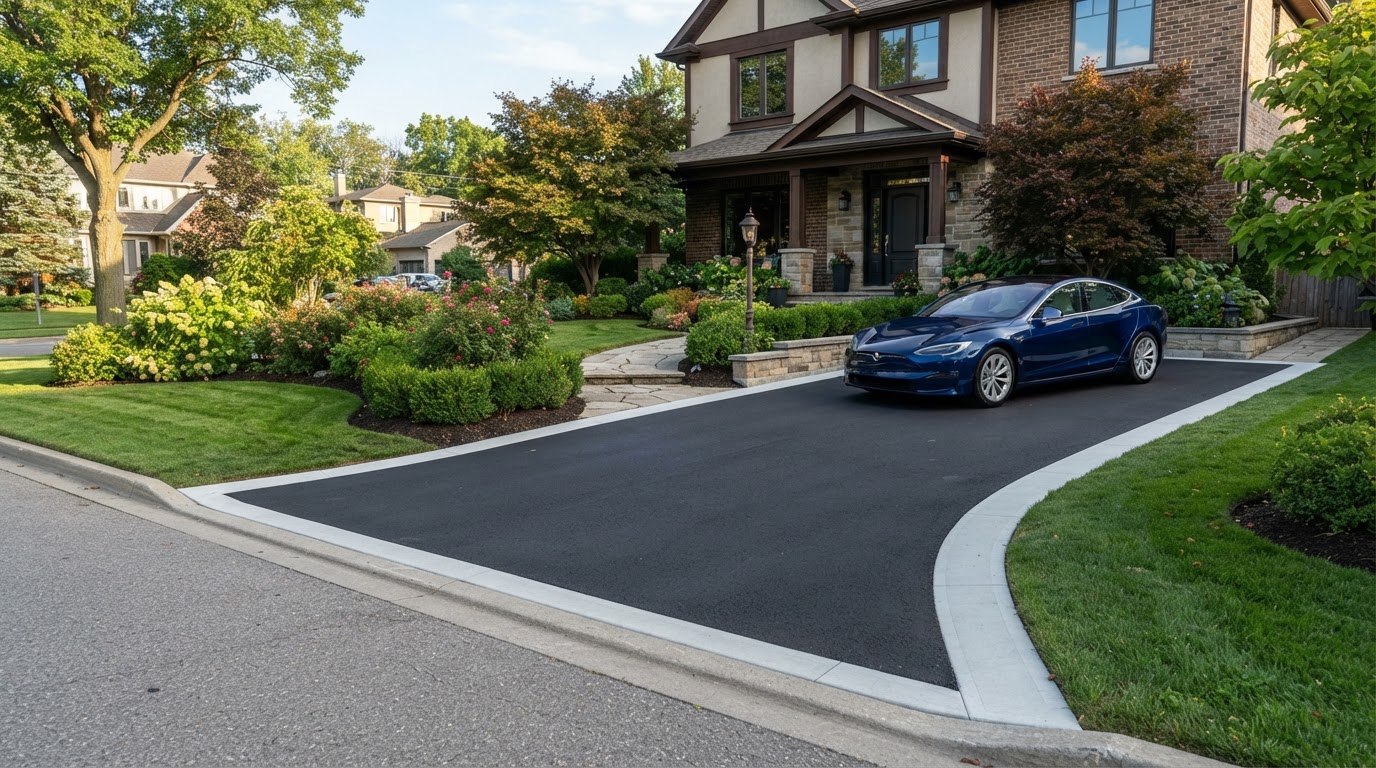
Why real estate investors and homeowners see measurable returns from resurfacing before listing a property.
Read Guide →Commercial & residential asphalt resurfacing, hot-mix overlays, and milling.
Browse Asphalt Resurfacing & Overlays